Showing posts with label VIKES. Show all posts

Friday, 16 December 2016

Eurohouse: second half of the year 2016


Journalists’ Study Trips: Palestine, Nepal, Ghana and Mianmar
In July Lithuanian journalist Karolis Vysniauskas joined an international group in a study trip to Palestine, organized by VIKES. Karolis shared his insights from the study trip the next day upon his return on Lithuanian National Radio program Ryto garsai. Later there appeared his stories on Palestinian media, women’s hip hop band in a refugee camp and the University of Bethlehem. He also developed an article for national newspaper Lietuvos žinios and appeared on National television morning show „Labas rytas, Lietuva“.
In September Lithuanian weekly Verslo žinios journalist Milda Tarcijonaite joined the international group in a trip to Nepal. Until now three articles, namely on uniting of small farmers to promote local products, the attempts to change traditional societal attitudes towards women and the challenges people meet in building new shelters, appeared in the weekly. Two more to come in the printed version of the newspaper and the portal www.vz.lt In November two journalists - freelancer Rosita Garskaite and Lithuanian National Radio journalists Vaida Pilibaityte – went on a study trip to Ghana in November to collect materials on European electronic waste dump, the legacy of the first President of Ghana, the role of the Catholic Church and the 60 years of independence of the country. The materials will be publisized on the National Radio Station and daily Lietuvos zinios.
In November another journalist from the National Radio Station Indrė Anskaitytė visited Mianmar to collect materials for the radio documentaries on economic development and tourism industry as well as remaining drastic social inequalities, political situation and abuse of human rights.


Journalist Vaida Pilibaitytė working in a field in Ghana, November, 2016

Rountables

The Lithuanian group, represented by governmental and non-governmental representatives, Mrs Ruta Avulyte Jelage, Executive Director of Lithuanian NGDO Platform, Mr Saulius Kalvelis, Councelor of Development Cooperation Department at the Ministry of Foreign Affairs, Ms Marija Kazlauskaite, Chief Officer of  Strategic planning division, Department of  Economics and International Relations of the Ministry of Environment, and Mr Kestutis Navickas, Chairman of Lithuanian Environment Coalition, participated at Bratislava International Roundtable: Sustainable Development Goals - Opportunities and Challenges, organized by the Slovak NGDO Platform in the beginning of September. Lithuanian representatives introduced the process of national preparation and organization for the implementation of the SDGs. Highlighting the challenges and  best practices in other countries, the event helped to set up closer cooperation between government institutions and other stakeholders, especially NGOs. Upon return, representatives from NGO umbrella organisations were offered to be members at the National Sustainable Development Commission.

During the electoral campaign to the Seimas (National Parliament), in early October the national roundtable discussion was organised between candidates of the main political parties and NGOs  on the implementation of SDGs in Lithuania, in particular tackling poverty, social inequality, improvement of education and other priority issues. The event was broadcast live on the Seimas internet TV and Facebook live. Following the discussion, several candidates were publicly asked related questions on the online platform www.zinaukarenku.lt about the implementation of SDGs in Lithuania and the role of education in it. In total, 54 responses from politicians were received.

Articles The cooperation with the national daily Lietuvos zinios has been renewed and a new sequence of articles on topical issues in developing countries appears weekly under a separate column The World as You See It from November 2016, both in electronic and printed versions. Three articles on different aspects of life in Malaysia, role of religion in Ghana and role of music and musicians community in Palestine were published. The articles also appear on the internet portal on human rights www.manoteises.lt

Informal discussions

Informal discussions on different developing countries were relaunched and are planned to take place till  summer 2017. Some of them are planned with foreigners residing in Vilnius, who are portrayed in a series of photo stories “Mūsiškiai” (Ours) - project’s social media campaign. The first informal meeting was organized on 24th November on the development and current situation of Ukraine with native Ukrainian living in Lithuania Diane Garlytska and publicist and activist Jonas Ohman. The discussion attracted over 30 participants.
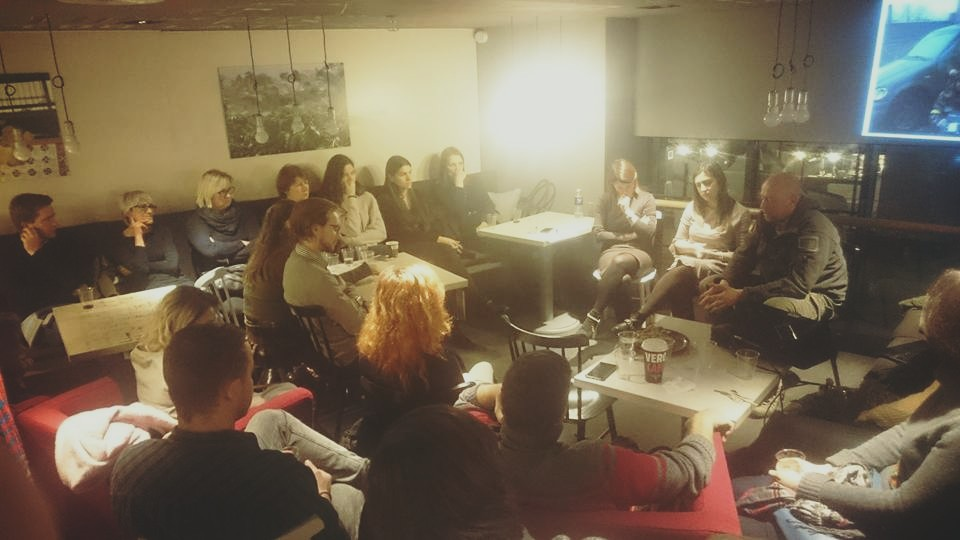

Another discussion was organised on 14 December with journalists Rosita Garskaite and Vaida Pilibaityte on Political situation and elections that took place few weeks ago were discussed. Special attention was paid to environmental issues and technologic waste dump in the capital Accra that harms not only people living and working in the dump but in the other areas of the city as well.  Local efforts to cope these problems through education and other initiatives were also discussed as well as significant role of religion and religious communities.

Social Media Campaign

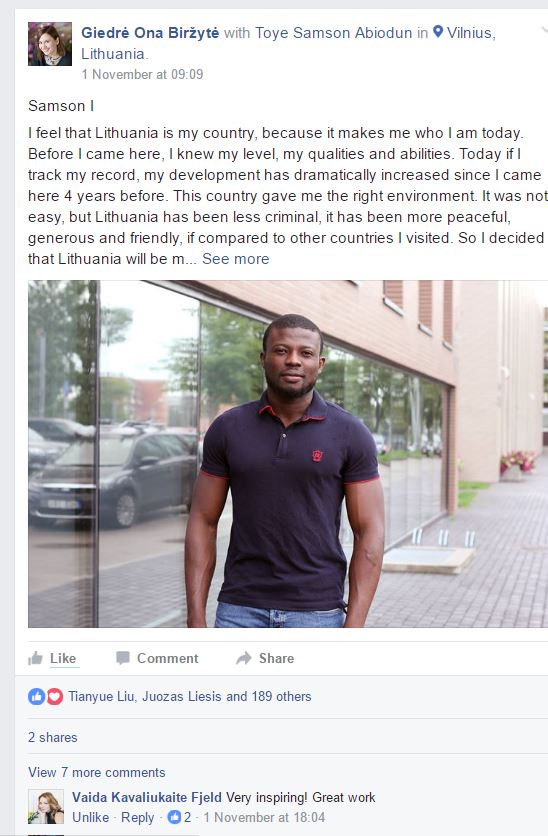
Social media campaign “Mūsiškiai” (“Ours”) has been launched in October.both in Lithuanian and English. In a series of photo stories posted on Facebook (can be found by hashtag #Ours #Mūsiškiai) we share the insights of the people who came to live in Lithuania from all over the world. They tell about their life both here and there, beautiful and painful things they encounter in Europe, Lithuania, challenges they face and stereotypes they hear. Every Tuesday we post a short photo story which will help Lithuanian public understand better and make these people more welcome. It also boost the awareness on specific country, for example Iran. People respond with comments and discussions takes place, especially in Facebook group “Foreigners in Vilnius”, which has around 6000 followers - both local and not.

So far 8 posts were made with 4 different personalities - people from Iran, Egypt, Nigeria and Ukraine. It reached around 15 000 audience on NGDO Platform alone, but the final number would be double or triple counting its popularity on public “Foreigners in Vilnius” group plus other posting places. The campaign will continue until summer. It has also offline features: informal discussions with the “heroes” of the photo stories are organised in Vilnius cafes, where various issues related to developing countries are discussed. Some of the stories will be developed into the articles and published in daily Lietuvos zinios and human rights portal www.manoteises.lt
Samson 11.JPG


Media Research

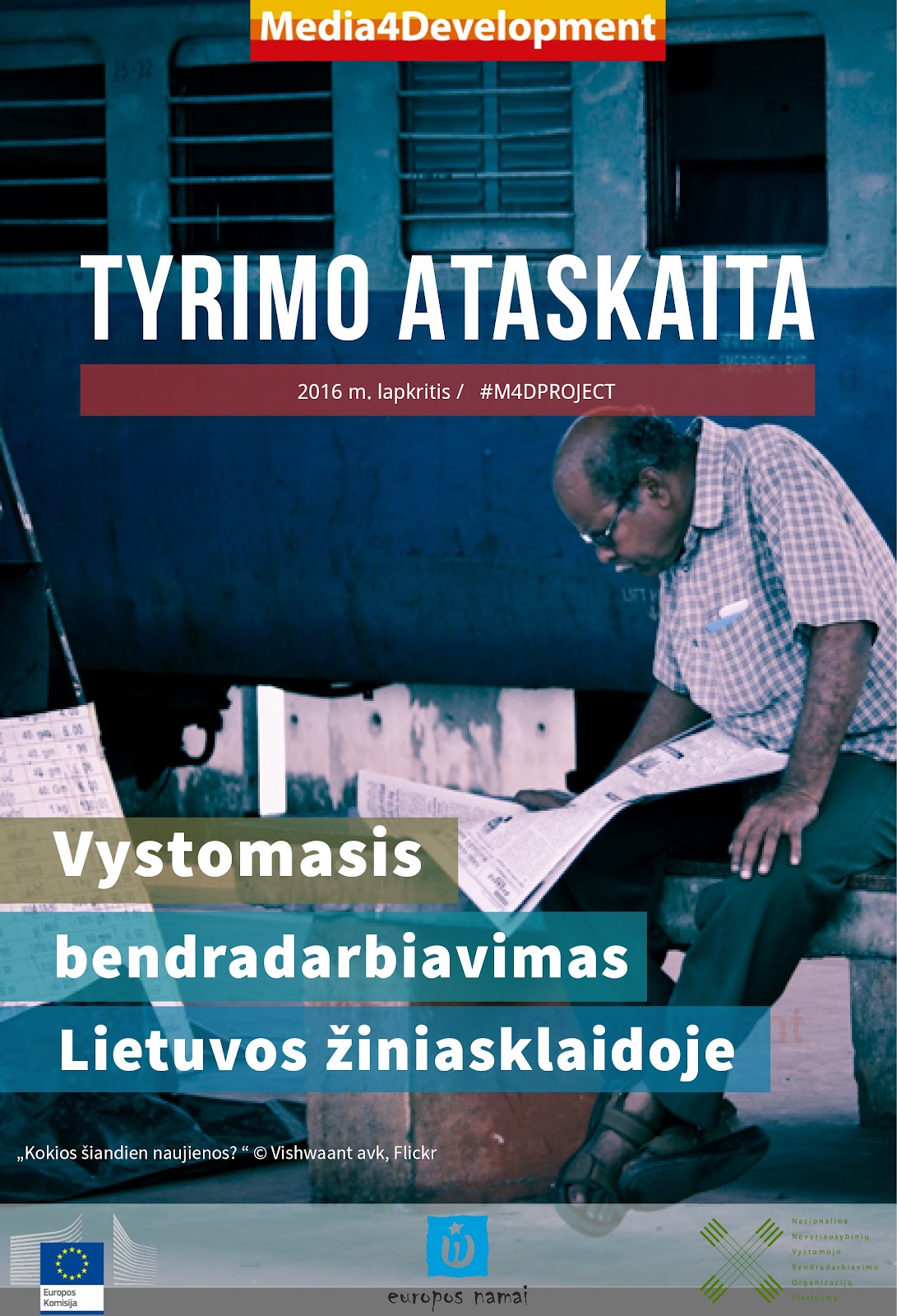
The qualitative media research was conducted to investigate the appearance of development issues in Lithuanian media. A group discussion and individual interviews were held with eight biggest media houses that publish most information on development issues. Major findings are as follows: (1) editors of media houses can hardly identify clear Lithuanian DC vision and priorities themselves and would like to have a more consistent defining of the national policy, communicated by both NGDOs and state institutions, also they lack information on the assistance transparency and efficiency mechanisms; (2) the content of the news portals is more and more defined by the editors-on-duty, also articles of opinion formers are getting more popular and bigger reach-out, therefore more conditions should be provided for them to gain authentic experience and develop their relevant competences, including practical trainings (3) media houses are looking forward to closer cooperation with field experts and NGOs; (4) considering the high competition between local and development topics, the latter should be presented in innovative, catchy and related to local contexts forms, etc.

The survey results were introduced at the international discussion on contemporary challenges in nowadays media Media Buzz versus quality journalism held on 18 August in Vilnius. The major audience there were Lithuanian journalism students.
The publication of the research can be found here.


Bulletin
Vystomasis bendradrbiavimas Lietuvos ziniasklaidoje-Tyrimo ataskaita-EN.jpg
The fourth issue of the electronic bulletin addresses the topics of Sustainable Development Agenda and national implementation of Sustainable Development Goals. Based on the interviews made with officials (Ms Raimonda Murmokaite, Ambassador of the Republic of Lithuania to the United Nations, Ms Violeta Motulaite, director of the Development Cooperation Department of the Ministry of Foreign Affairs, Mr Kestutis Navickas, Minister of Environment), the articles cover the status quo in preparing to implement SDGs in Lithuania, the global concept of SDGs, the problems related to defining global indicators, best national practices in the preparation for SDG implementation, etc. The publication is sent out in mid-December 2016 to 551 subscribers (decision makers, media, NGO activists and other subscribers of the NGDO Platform  newsletter). It is also publisized on the internet sites of the House of Europe and NGDO Platform (pagalba.org). Later on, it is planned to publish individual articles in the media.
Miscellaneous

10 November project staff met with the representatives of the Africa Unit of the Ministry of Foreign Affairs to discuss cooperation possibilities in organising Africa Days events in 2017.

The bulletin and the project was introduced at the national development cooperation conference Sustainable Development Goals 2030: Lithuanian Contribution and Responsibility held on 6 December by the Ministry of Foreign Affairs.

Negotiations are underway with the Institute of Strategic Communications on the joint organisation of the journalists article/photo competition and the study trip of the winners to developing countries in 2017.


Wednesday, 5 October 2016

VIKES Joint Study Trip to Nepal

In September, we took seven journalists from the Baltic countries, the Czech Republic and Slovakia for a joint trip to Nepal. The trip was part of our EU project and it was carried out in collaboration with the VIKES local partner Centre for investigative Journalism of Nepal. 

The eye-opening journey took the journalists to the worst affected areas by the 2015 earthquake. The group interviewed local journalists, members of the discriminated Thami community, victims of human trafficking, as well as human rights activists.  Some of the most memorable moments were the interviews with the residents of the women’s shelter and the visits to the camps of the earthquake and landslide survivors. 

The preparation of the programme started already in April this year, when the reporters met each other in our training event in Helsinki. 

During the trip, the group worked together and we witnessed how the self-confidence of the future foreign correspondents grew as they gained new experience. The expertise of the Nepali journalist colleagues diversified the reporting. The local journalists also got inspired by the visit and thought that some of the questions raised by their European colleagues are lacking from the Nepali media. 

We are looking forward to seeing the results of the journey soon in Estonian, Latvian, Lithuanian, Slovakian and Czech media! 

Please see some pictures from the trip below. You can find more photos here.

Interviewing the earthquake survivors from the Thami minority in the Suspa Panikpokhar camp. Photo: Maiju Mitrunen  
Our group of female reporters were interested in hearing about women's life in Nepal. Photo: Maiju Mitrunen 
Visiting a farm in Makaibari, Dolakha district. Photo: Anurag Acharya, CIJ Nepal 
The group of reporters listens silently as their colleague Rajindra Mandhai (second from the left) tells about the earthquake while standing on the ruins of his own house. Photo: Maiju Mitrunen 
Some of the most memorable interviews were done in a Women's Shelter in Charikot town. In the picture: the founder and Head of the shelter Sirjana Karki. Photo: Maiju Mitrunen

The rebuilding after the 2015 earthquake is in the hands of the locals. Photo: Maiju Mitrunen.

The group with the staff of Himal Khabalpatrika newspaper in Kathmandu. Photo: Maiju Mitrunen.

Local health and social science teacher is interviewed by Santa Logina (Latvia), Katarina Kovacova (Slovakia) and Milda Tarcijonaite (Lithuania). Photo: Maiju Mitrunen
Interviewing students and teachers in a  local school in Jure, Sindhupalchowk district. Photo: Maiju Mitrunen
Anette Parksepp (ERR, Estonia) is interviewing a local woman who has just started building a new house in Sindupalchowk. Anurag Acharya (CIJ Nepal) translates. Photo: Maiju Mitrunen


Texts and photos: Project Coordinator Maiju Mitrunen, VIKES

Participate in the discussion on Twitter with #M4Dproject 

Also, read the comments by the participants from the previous posts by the other project partners!


Monday, 3 October 2016

Eye-Opening Journey to Israel and West Bank by VIKES


VIKES did not rest during the summer either! In July 2016, we took a group of journalists from Estonia, Latvia, Lithuania, Czech Republic and Slovakia for a week-long study trip to Israel and the West Bank.

The trip deepened the participants knowledge on development issues and gave them practical experience on what it is like to work as a journalist in conflict areas. The five journalists that took part in the study trip were excited but also confused and shocked about the places they visited and the people they met in Israel and the Palestinian territories. 

The trip was a great success and the participants gave it an overall score of 4.8 / 5. All of them would "extremely" or "very" likely recommend a similar trip to a colleague. Also, according to the feedback, all of them will work on the issues discussed during the trip also in the future. They especially liked the work done by VIKES trip coordinator Anna Palmén in organizing the programme and arranging the interviews and visits. The practical arrangements of the trip by VIKES and the other project partners also received many praises in the online feedback form.

Please see some pictures from the trip below. You can find more photos here.

Photos: Anna Palmén (VIKES, Finland) and Piia Puuraid (Ekspress Media, Estonia)

Photo: Piia Puuraid, Ekspress Media (Estonia).


Photo: Piia Puuraid, Ekspress Media (Estonia).

Photo: Piia Puuraid, Ekspress Media (Estonia).


Photo: Piia Puuraid, Ekspress Media (Estonia).
Photo: Piia Puuraid, Ekspress Media (Estonia). 
Photo: Anna Palmén, VIKES. 
The whole group with driver and translator Issa Loussi and trip coordinator Anna Palmén. Photo: Anna Palmén, VIKES.


Texts: Maiju Mitrunen, VIKES
Follow the discussion on Twitter: #M4Dproject

Also, read the comments by the participants from the previous posts by the other project partners!

Thursday, 29 September 2016

Reporting World News: Intensive Course on Development for Journalists by VIKES

During the past couple of years we have witnessed an influx of conflicts, violence and wars, and the foreign news sections of our newspapers have been filled with pictures of refugees. The professional skills of journalists are measured in reporting on these global issues. How to find the real stories and sources? How to separate propaganda from reality? How to get behind the headlines? Especially in a world where the foreign news section of the newspaper is the first to suffer from budget cuts. How do we see the world through today’s media? Is the world really getting better or worse?

The three-day intensive course, organized by the Finnish Foundation for Media and Development (VIKES) aimed to answer these questions and increase knowledge about development affairs among media.


The training encouraged the young journalists from Estonia, Latvia, Lithunia, Slovakia, Czech Republic and Finland to think big when it comes to development issues!


VIKES organized the training on development issues and global interdependencies for a selected group of journalists in Helsinki 20 - 22 April 2016.  The training was mainly conducted by experienced journalists that shared their own experiences from working as a journalist in conflict areas or developing countries.


The trainers and speakers included experts such as freelance journalist Amie Ferris-Rotman and photojournalist Niklas Meltio. During the three days of training the participants went through different development issues from climate change to sustainable development from media's perspective.  The participants also got a chance to get to know colleagues from all around the world. 

The journalists taking part in the training will also be given a chance to go on study trips to developing countries organized by the different project partners.

Environmental journalist Kari Rissa telling about the impact of climate change to developing countries.


Pekka Reinikainen (Finnish Red Cross), Aishi Zidan (Amnesty Finland) and photojournalist Niklas Meltio discussing how the Western media covers migration. The discussion was moderated by Anni Valtonen (Maailman Kuvalehti).


The Female-dominated group of future foreign correspondents.

Anni Valtonen (Maailman Kuvalehti) asked Pekka Reinikainen (Red Cross), journalist Amie-Ferris-Rotman and photojournalist Niklas Meltio how they deal with emotional trauma during covering traumatic events.

Amie Ferris-Rotman described her work as the Foreign Correspondent for Reuters in Kabul, Afghanistan.

Amie Ferris-Rotman heading a workshop on planning the programme for trips and convincing the editors.

The devastating effects of the April 2015 earthquake in Nepal by Program Manager Anurag Acharya from the Centre for Investigative Journalism Nepal.

VIKES partners Editor Shiva Gaunle and Program Manager Anurag Acharya from the Centre for Investigative Journalism Nepal describing the difference of local and foreign reporting.

Journalist Amie Ferris-Rotman (freelancer), Program Manager Anurag Acharya (CIJ Nepal), journalist Katri Merikallio (Suomen Kuvalehti) and Coordinator Maiju Mitrunen (VIKES) discussing about the practicalities of world news and journalism.

Lyydia Kilpi from NGO network Kepa told the participants what tax havens have to do with development.

See more pictures here. Also, read the comments by the participants from the previous posts by the other project partners!


Photos & texts: Maiju Mitrunen, VIKES

Follow the discussion on Twitter: #M4Dproject


Friday, 17 June 2016

Getting to the truth: Journalists from Latvia share their experience about participation in media seminar organized by VIKES

The Finnish Foundation for Media, Communication and Development (VIKES) organized three day seminar for journalists who have recently started their career. The focus was on such topics as timely media issues in global context, sustainable development, natural resources and disasters, migration and war coverage.

During “Media for development” project VIKES gathered journalists from partner organizations which are based in such countries as Estonia, Lithuania, Latvia, Czech Republic and Slovakia. Project coordinator in Latvia is organization Green Liberty, and it was represented by Iveta Sondore (“Vides Vēstis”), Anna Ūdre (“FEJS Latvija” valdes priekšsēdētāja ) and Santa Logina (“Zemgales Ziņas”).
Iveta Sondore studies anthropology at Riga Stradins University and works as freelancer for “Vides vēstis”. She’s very glad about the experience in Helsinki and believes that such seminars are useful not only for journalism students, but can also be an inspiration for other communication field representatives. “There were some discussions which made great impression on me, because industry representatives were talking about their real life experience, not only theory. I remember panel discussion about reporting on crisis with Pekka Reinikainen from Finnish Red Cross, war photojournalist Niklas Meltio and freelance journalist Aemi Ferris-Rotman. They not only shared their tragic and rich experiences about reporting from warzones and during natural disasters, but also talked about the importance of investigative journalism - to not only cover such issues superficially, but to do bigger research and to find what’s common for all of them,” says Iveta.
„During this three day seminar I met many other young journalists from around Easter Europe who are interested in same topics as I am. It was very refreshing and useful to exchange our thoughts and ideas about media related topics,” says Anna Ūdre. She is currently freelancing for national newspaper in Latvia “Neatkarīgā Rīta Avīze”, working as chairman of the board at independent organization dedicated to young journalists “FEJS Latvija” and studying journalism at Riga Stradins University. “All lectures, discussions and trainings were very useful and also practical. Especially useful was the last day when professional journalists had discussion about safety of freelancers and they were giving tips for going abroad when covering conflicts. They were all full of stories and knowledge,” she adds. Anna thinks it’s very important to organize such projects to meet other professionals and invest in them at early stage of their career.
Santa Logina, journalist of regional newspaper “Zemgales Zinas” (“News of Zemgale Region”), participation in the seminar values as qualitative opportunity of how to expand horizons. “While working at local media, where the most important are local events, the focus on topicalities of world is secondary – as much as they influence local people. Participation in the seminar inspired to think more about everyday life in developing countries and problem areas, where poverty and war goes together with needs of clean water, food, safe and comfortable life. Speakers of the seminar for me opened wider the door to this world,” says Santa. The young journalists in every story were encouraged to look forward for positive things and don't rely on stereotypes. “For example, it was noticed that poverty doesn't mean that a person is stupid – to survive when you don't have anything, you have to be smart. Especially inspiring were journalist Aemi Ferris-Rotman and her stories of women rights in Afghanistan, also the emotional speech of Anurag Acharya and Shiva Gaunle about Nepal after the earthquake in 2015 and potential disasters. Very useful were trainings when journalists were told how to get prepared for travels to developing countries,” says Santa.

Participants agree that seminars like this not only give more knowledge, but also teach how to avoid stereotypes, how to find the truth and pay attention to local problems of developing countries that will affect the whole world sooner or later. It's very important for young journalists to learn it even if their everyday work isn't connected with reporting from developing countries or the war zones. Learn to dig deeper!

Wednesday, 25 February 2015

Introducing the Finnish Foundation for Media, Communication and Development (VIKES)

The Finnish Foundation for Media, Communication and Development (known by its Finnish acronym VIKES) is Finland’s leading specialist in freedom of expression internationally. Our mission is to promote freedom of expression and journalistic plurality as the foundations for democracy and development. In other words, VIKES is a development organization that promotes free, critical and quality journalism. In 2014, we supported freedom of expression in 14 different countries through 10 different projects in Africa, Asia and Latin America.

VIKES was established in 2005 on the initiative of the Union of Journalists in Finland, and it brings together the whole Finnish journalistic community. Finnish journalists are particularly well placed to promote freedom of expression, as Finland is a world leader in both freedom of the press and government transparency. For example, Finland has remained at the top of the World Press Freedom Index for five years running.

Yet, the 2015 World Press Freedom Index highlights the worldwide deterioration in freedom of information in 2014. Beset by wars, the growing threat from non-state operatives, violence during demonstrations and the economic crisis, media freedom is in retreat on all five continents. More than ever, journalists are being persecuted, imprisoned and murdered because of their work. Freelance journalists who have to work in unstable areas, together with their local assistants, are particularly at risk. In addition to political and economic pressures, journalistic freedom is undermined by the expansion of public relations and lobbying. And yet the solution for global environmental, economic and human rights problems requires the existence of critical and professional journalism.

Independent, professional media and open communication networks contribute to both civil society and sustainable economic development, and in that way to the eradication of poverty. Furthermore, transparency, openness, and citizens’ right to communication are basic conditions of development. Freedom of expression is a precondition for democracy and human rights.

Subsequently, the Finnish Foundation for Media, Communication and Development (VIKES) will participate in the Media for Development Programme both to provide expert advice and to promote freedom of expression. Through the contacts of VIKES the journalists can also have chance to work together with local journalists in developing countries to understand better the role of media in development.

In 2015, the Media for Development the planned project activities for VIKES include:
•    Providing expert journalism input to the TV-production planning meeting organized by ERR in Estonia in March.       
•    Organizing a training for writing journalists from the new EU member states in Finland in April.
•    Organizing the programme of a joint study-trip for the writing journalists to a developing country in Africa or Asia in September/October.
•    Providing expert policy-maker input to an international roundtable on development financing in Latvia organized by Green Liberty in June.
•    Raising public awareness on freedom of expression and development cooperation through VIKES’ network of journalists and communication channels in Finland.

Contact us and participate:
maiju.mitrunen(at)vikes.fi
Follow us: on Facebook and Twitter.