
Articles
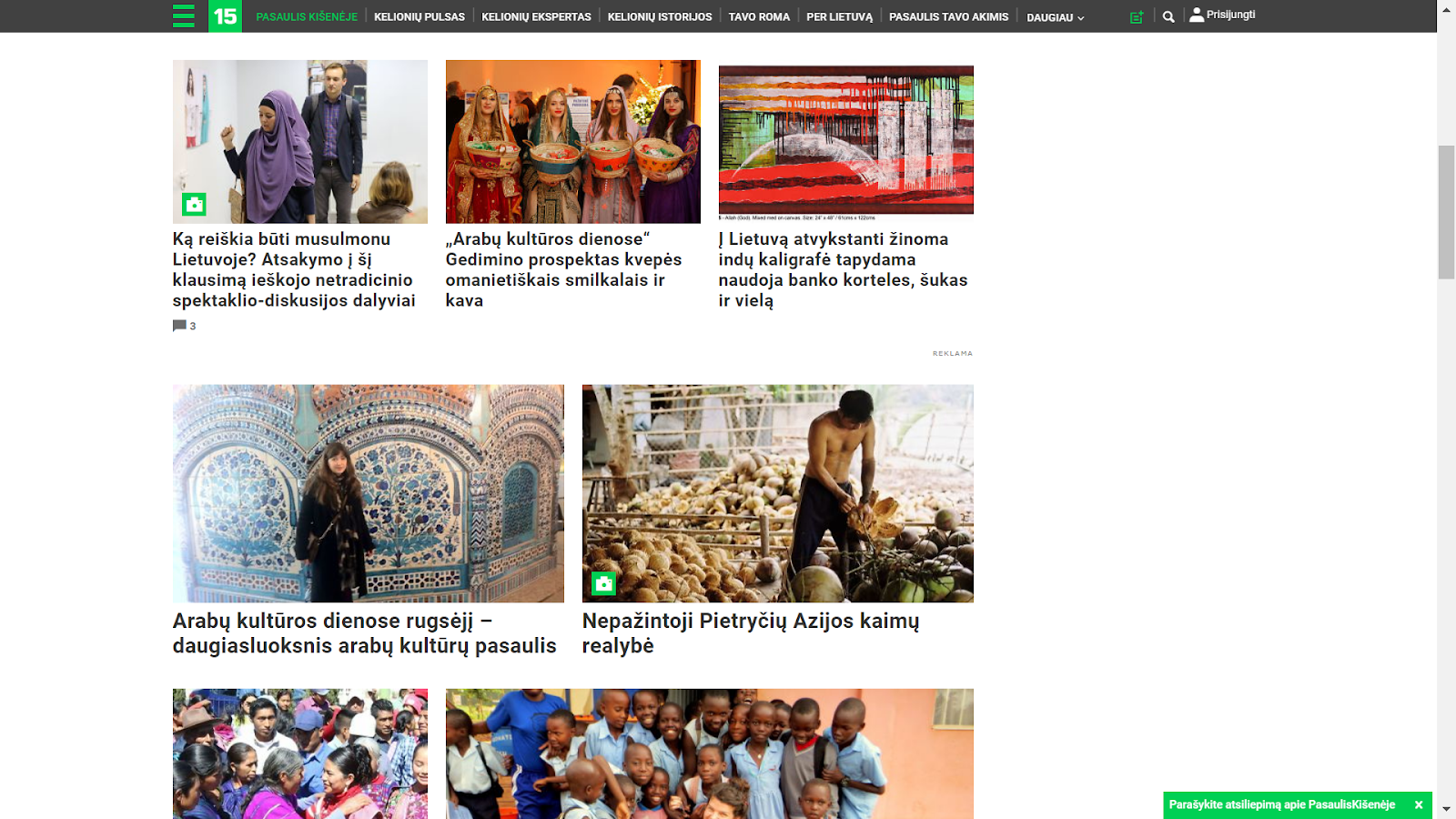
Articles were published in a separate column The World as You See It in the national portal www.15min.lt during Autumn. Newest articles covered indigenous people’s everyday life in the villages of South Asia as well as special article series on the occasion of Arab culture days: the variety of Arab culture, Arabic caligraphy and the traditions and cuisine of Oman. Further, article by Goda Jurevičiūtė on the situation of refugees in Uganda was published in printed and online version of Lithuanian daily “Lietuvos žinios”.
Study trips
Afghanistan
The journalist of news portal 15min.lt Paulius Ramanauskas joined the study trip to Afghanistan on 17-26 July. During visit organized by BAAG he visited the province of Daikondi and prepred several reportages on the following: the issues of refugees, higher education and independent media in conflict zone as well as efforts to cope with consequences of climate change in Afghanistan. Also a 360° reportage appeared on news portal 15min.lt covering the role of NGOs in helping locals to develop businesses as well as educational issues in the province of Daikondi.
Mali and Ghana
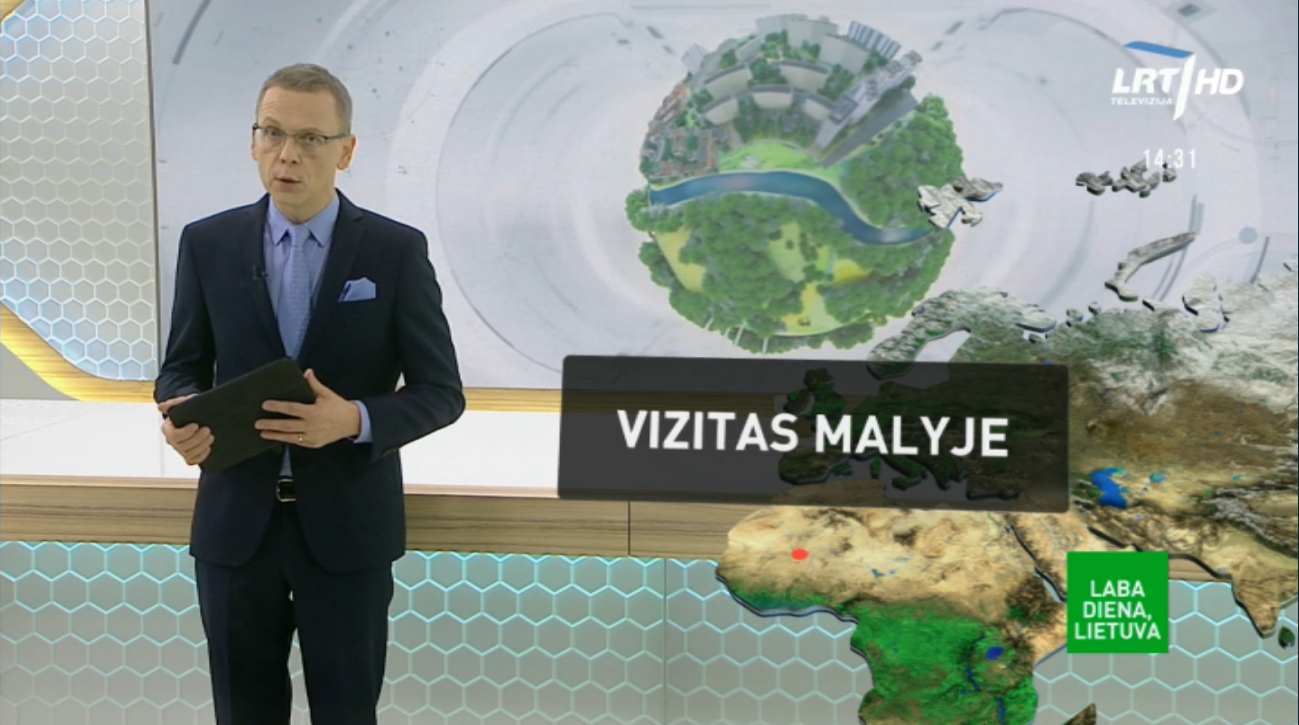
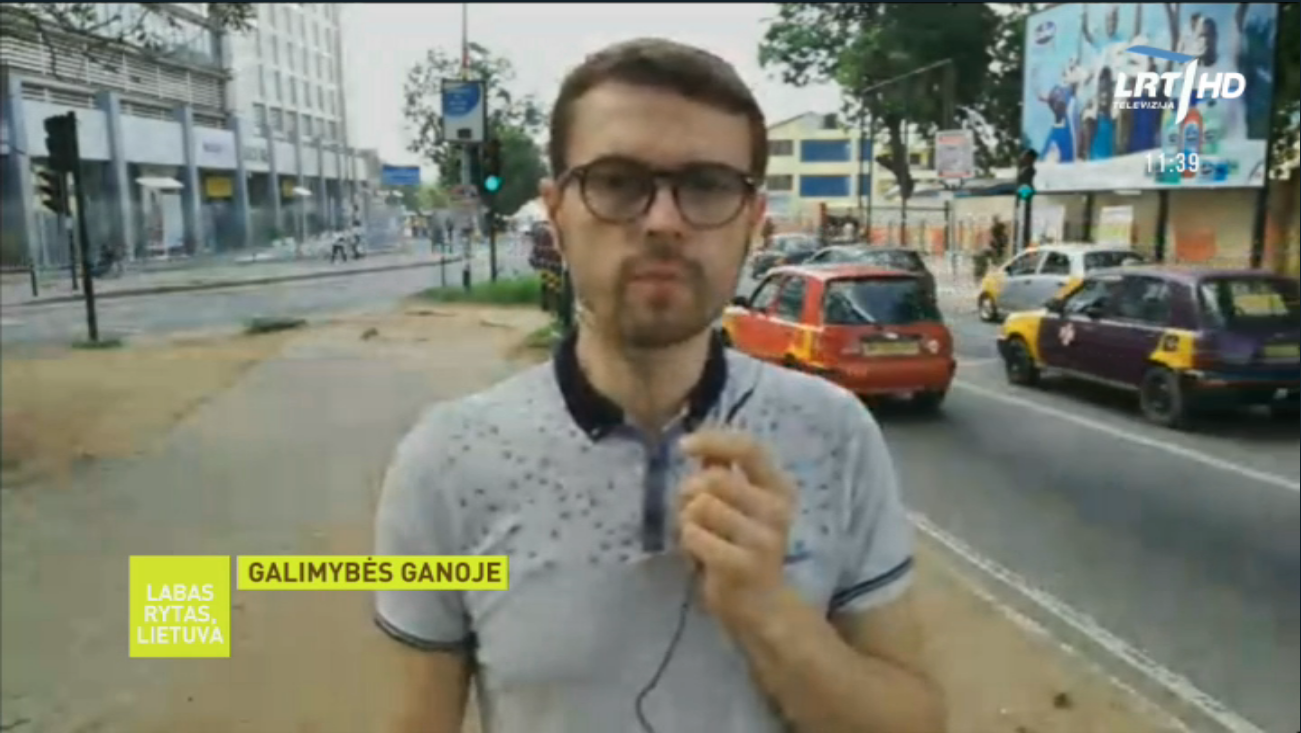
The journalist of Lithuanian national TV Giedrius Vitkauskas went on a trip to Mali and Ghana 15 to 23 October. The journalist accompanied the Lithuanian Minister of Foreign Affairs Mr Linas Antanas Linkevičius. Following the trip reportages were aired on national TV station on the national mission in Mali and security issues in the country as well as current situation in Ghana, its cultural and economical development and the issue of pollution of electronic waste dump in Accra.
Rwanda/Burundi
11 to 22 November, independent journalist Giedre Steikunaite and NGDO platform executive director Justina Kaluinaitė visited Rwanda. During an intensive visit numerous meetings were organised. Various sectors of Rwanda’s contemporary realities were explored with the help of local experts, including the ICT and agricultural sectors, inspiring entrepreneurs, CSOs, modern fashion designers, social music projects, business, the flourishing art scene and the government’s programmes for reconciliation and nation-building two decades after the genocide during which more than 800,000 people were murdered. Also, interviews with exiled Burundian journalists, Burundian radio stations and the association of journalist who had fled violence in their home country following a violent crackdown on protests against illegal actions by the government. A series of illustrated articles in Lithuanian media are to be published in December.
Ukraine
National TV crew - director Rimantas Bruzas, camerawoman Migle Gaiziute and journarlist Edvardas Spokas - went to Ukraine in October to shoot the second documentary about the frozen conflict in Ukraine, in particular the everyday life of people in the war zone in Eastern Ukraine who got used to the sound of shooting, who on their way to their work run across dangerous streets trying to escape snipers. The documentary Till the End. And Somewhat More is to be aired on 18 December.
Arab Culture Days 2017
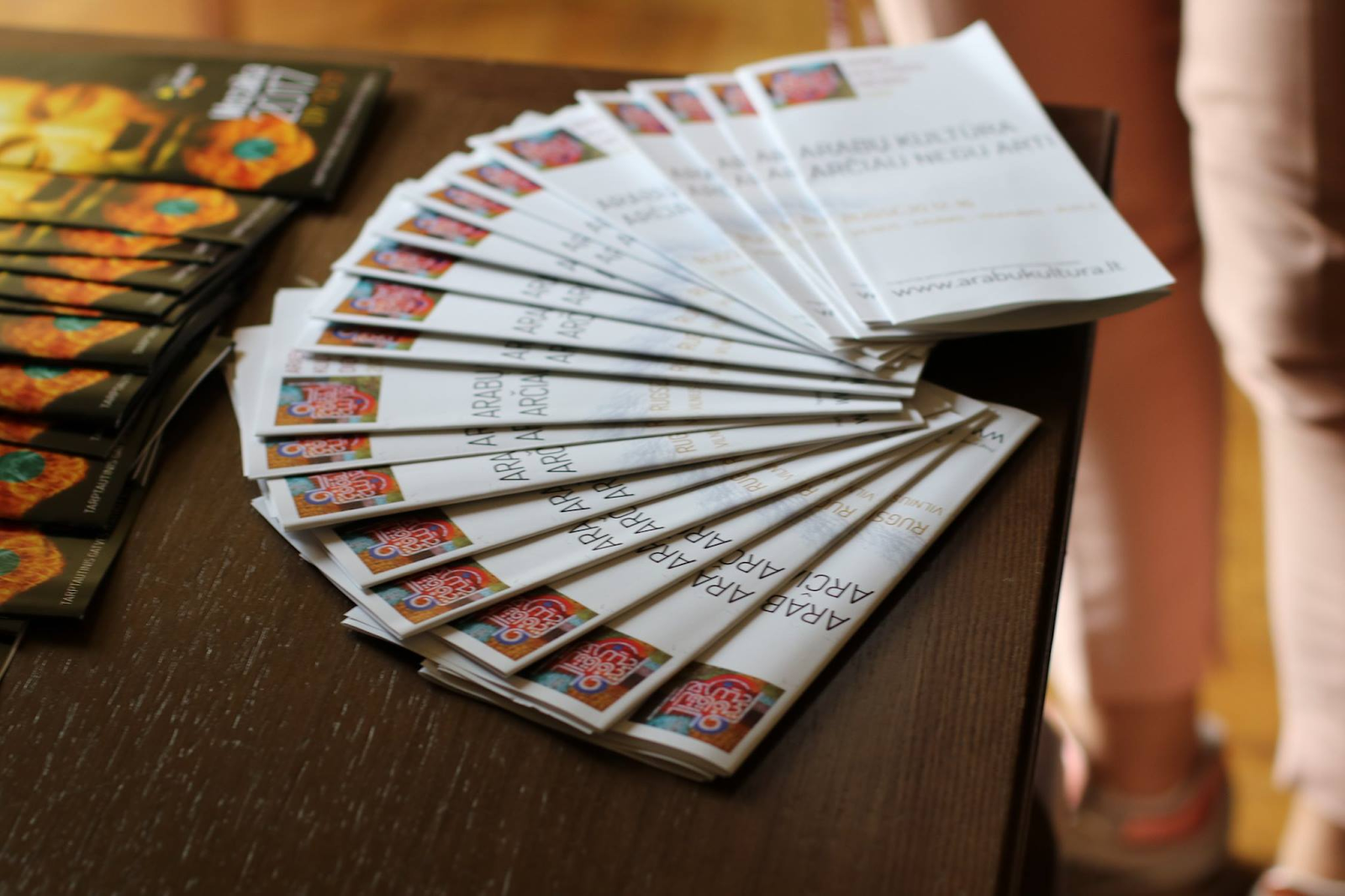
On 12-16 September Anna Lindh Foundation in Lithuania organized the Arab Culture Days events in Vilnius, Kaunas, Visaginas and Rukla. The events aimed to raise awareness on the Arab world by Lithuanian public and help them understand the variety and complexity of the Arab culture. The events organised included lectures about Arab culture, performances of artists from Palestine, Lebanon, Saudi Arabia, Oman and others, photo exhibitions, theatre performances and other. An overview of the events is presented in this video. Under the project there were organised several events: forum theatre performances. lecture, and a photo exhibition about Palestine and its history, workshop on Arab caligraphy and traditional music concert by Palestinian artist Ahmad Dari as well as the communication of the overall program.
Forum theatre performances
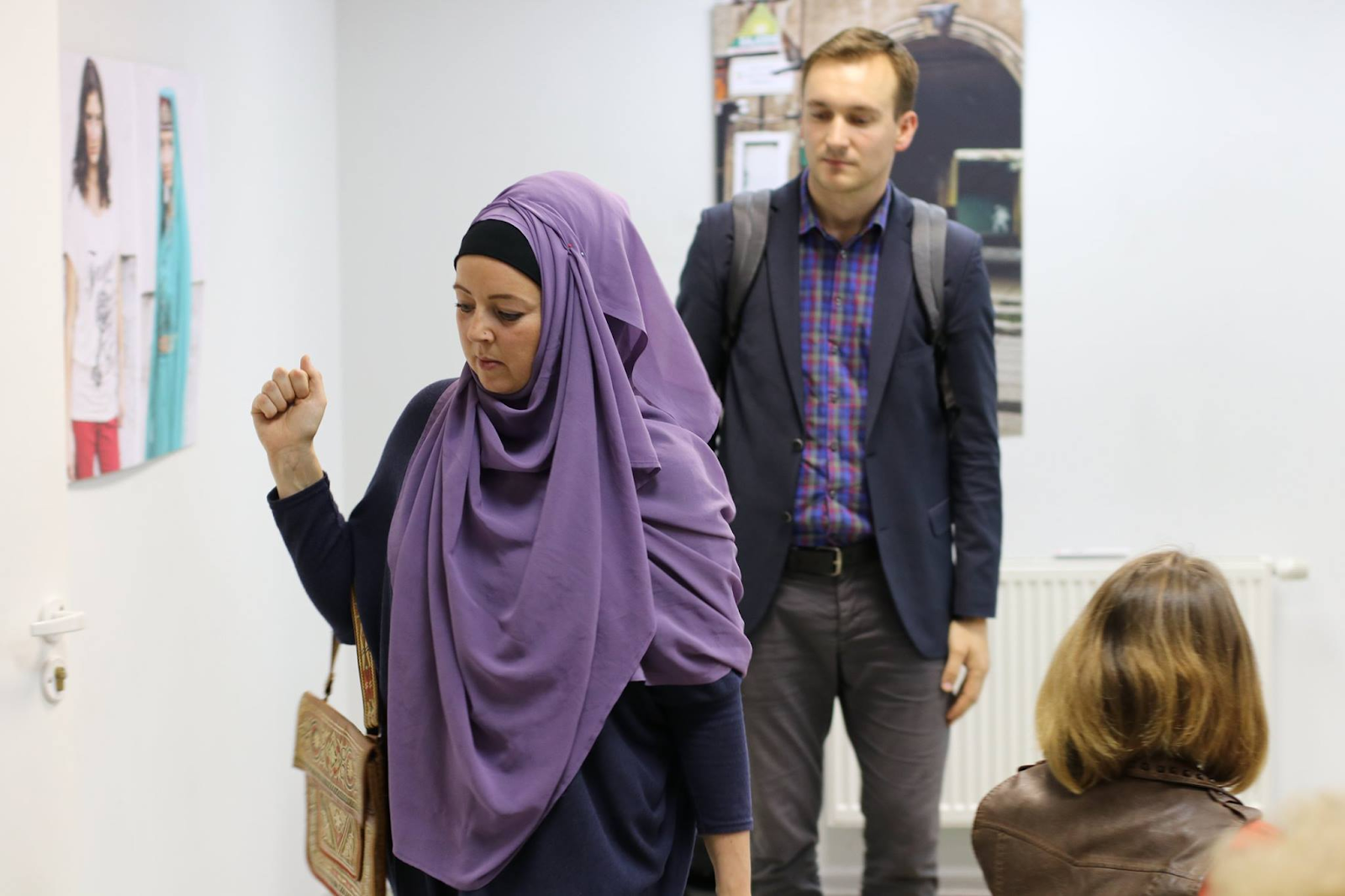
Forum theatre performances were organized to highlight and facilitate discussions on the muslim culture so that local people become better informed on the variety of muslim countries, identities and people. The performance simulated the situation of a muslim couple from Liberia facing suspicion, ignorance and ungrounded fears of local people while trying to rent an apartment. Each performance was followed by roundtable discussion with experts on Islam and development.
Ten performances and discussions took place in September and October in the following cities and towns: Vilnius, Kaunas, Klaipėda, Palanga, Marijampolė, Garliava, Kupiškis, Lentvaris and Želva. Overall around 300 people have participated in the events.
Round table discussions
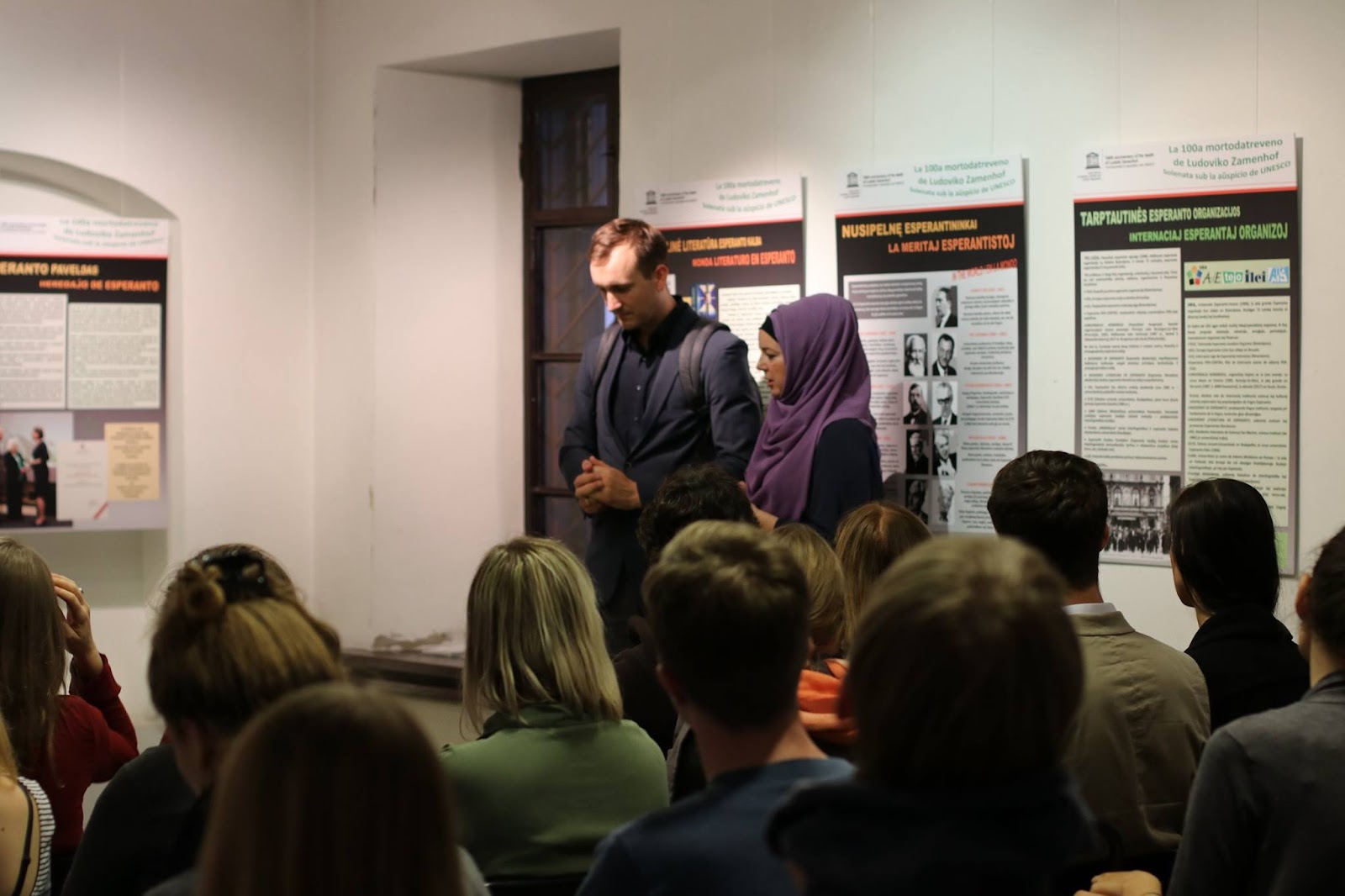
Two public discussions in various public venues in Vilnius about developing countries took place. The presentations were made by project journalists and Lithuanian residents from developing countries.
Uganda’s economical, social and cultural development, success stories of local people coping with challenging situations by Lithuanian daily Lietuvos zinios journalist Goda Jurevičiūtė. During a short visit Goda met a lot of activists, artists and innovators who are brave enough, despite all the difficulties, to change and improve not only their own, but also other people's lives.
Amongst those is a film director, who established a film studio in the slums of Kampala.Or an ex-soldier kid, who opened a free school for those of a similar background. An engineer spreading his passion for chess playing to street kids. An activist fighting the discrimination against LGBTQ community. You will hear these and other stories during the meeting with the journalist.
Social and public safety problems in Honduras by politologist, activist and artist Ian G. Diaz, currently residing in Lithuania. The news received about Honduras in recent years are all about violence and tension. Probably most people heard that Honduras is one of the most dangerous country in the world and that it is a young country in Central America, fighting with various problems, such as corruption and military coups.
How do people live in a country where death from a knife of bullet is an everyday thing? While at the same time people never stop smiling and open their hearts and homes to the tourists. A politologist, activist and artist Ian G. Diaz told us about his homeland and how he discovered himself as an active citizen.
Discussions due in December
A public discussion on current situation in Eastern Ukraine with the national TV journalist Edvardas Spokas and the crew was carried out on 11 December. Though the media coverage might suggest an impression that the conflict is over, unfortunately heavy fighting is still going on every day. The journalists went to the cities of Avdiivka and Marjinka which are close to the main front line to observe the everyday life of people there. Therefore, they shared their observations and experiences as well as announced their documentary Till the End. And Somewhat More to be aired on 18 December.
On 15 December NGDO platform executive director Justina Kaluinaite and freelance journalist Giedre Steikunaite talked about their visit to Rwanda from a different perspective. The general public is still engaged with stereotypical image of poor and traumatized country after massive genocide in mid-nineties. Meanwhile, the real situation is somewhat different. The young generation is keen on developing smart technologies, government strongly supports business start-ups and the country is recognized as one of the best places to do business in Africa region.
Social media campaign
Social media campaign “Ours” (“Musiskiai”) was continued by posting short photostories about people from developing countries living in Lithuania and relevant issues in their homeland. Photo series’ posting was resumed after summer break again in the autumn. Pictures of the foreigners living in Vilnius and willing to share their thoughts about global issues, experience here in Lithuania and their home countries were posted in several places on Facebook. The main sites were Facebook page https://www.facebook.com/OursLT/ and Foreigners in Vilnius group, depending on the content of the posts, sometimes also NGDO’s Platform Facebook page. Usually it was shared by portrayed foreigners themselves on their personal accounts pages. People from Honduras, Indonesia, Russia, Georgia, Ecuador, Palestine and others were portrayed. The separate Facebook page which was launched in spring currently has more than 400 followers.
SDGs awareness raising campaign
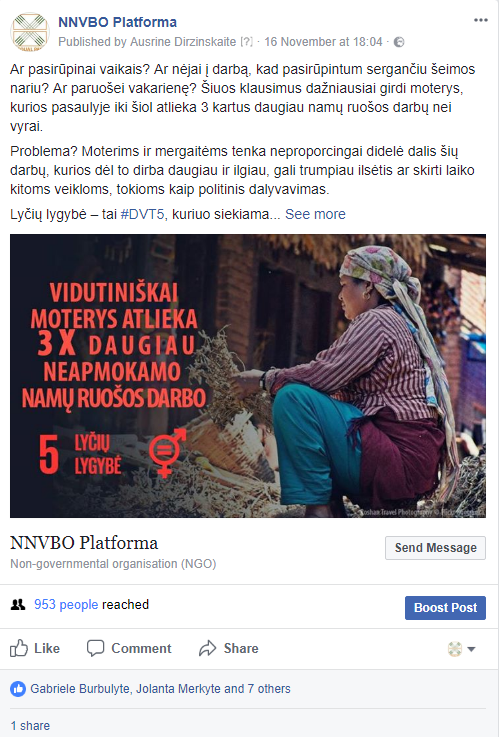
Since March a campaign #PasaulisPo1Stogu aiming to raise awareness on Sustainable Development Goals has been implemented on Facebook and will last till the end of the year and beyond. The campaign promotes all of 17 SDGs introducing the goals and related data, indicators and examples of how both countries and individuals would benefit upon achieving them. Each month is dedicated to one of the SDGs with approximately 8 posts appearing on the particular goal. There have been presented the following goals until now: good health and well-being, peace, justice and strong institutions, reduction of climate change, affordable and clean energy, sustainable cities and communities, partnership for the goals and gender equality.
Also quizzes on regional Alytus and Saulės radijas have taken place on August-November of 2017, casting questions related to SDGs on air thus raising the awareness of people in Šiauliai and Alytus regions of Lithuania about the Sustainable development and the SDGs. Quizzes were organized virtually in Facebook as well.
Closing event
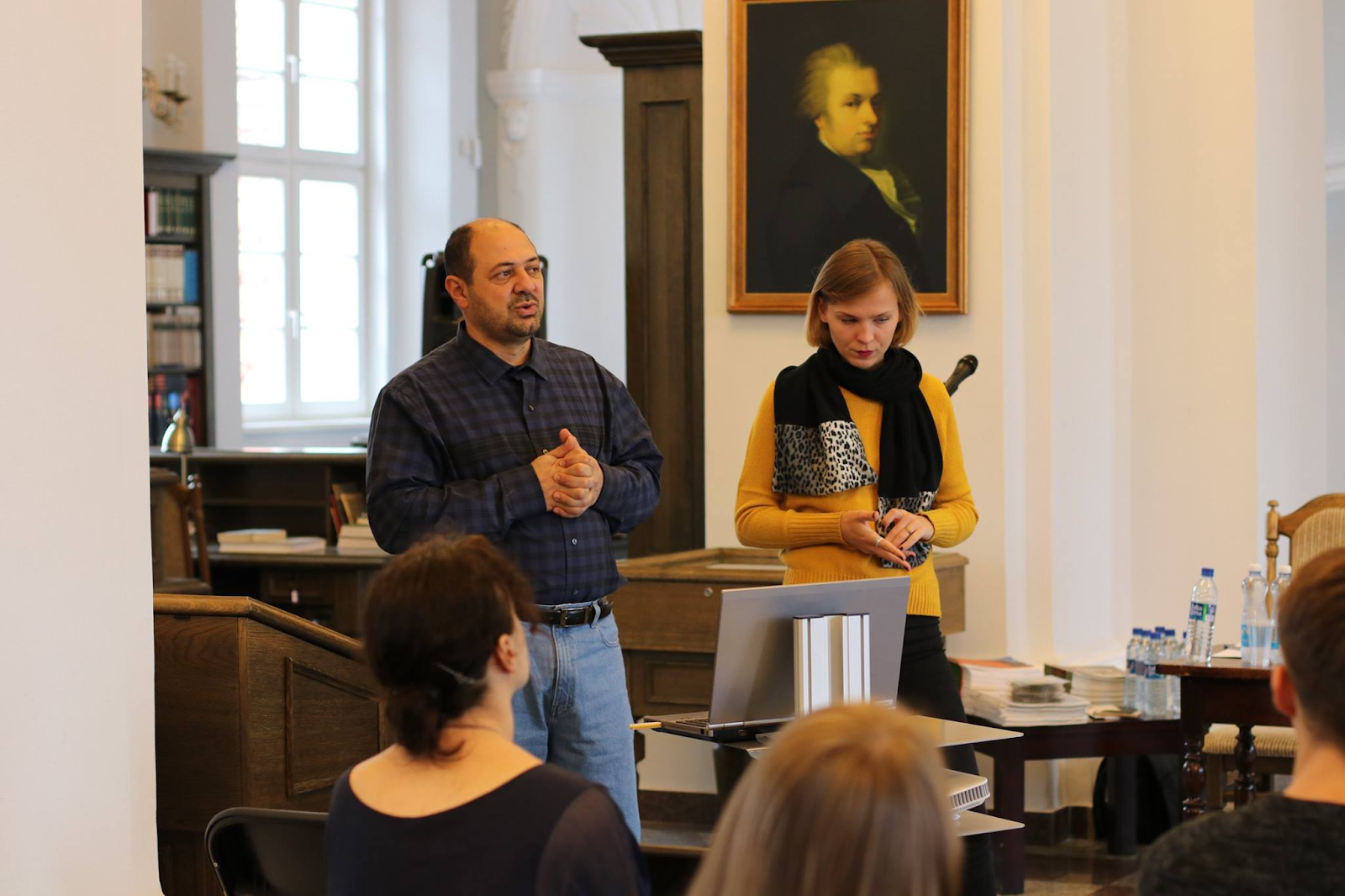
On 30 November a national final roundtable event was organised for Lithuanian journalists and project partners. The photo and video reporter Marketa Kutilova from Czech Republic shared her professional experiences of reporting on in war and conflict countries, focusing on the role of journalists in both informing the public at home and participating in the processes in developing countries, how to make audiences interested in developing world and issues related to countries far away from home; how to find common and cross-cultural means of getting your stories through to different audiences as well as journalism and ethics.
After the presentation a panel discussion with participation of freelance journalist Giedrė Steikūnaitė, Afri/Ko founder Mantė Makauskaitė and official from the MFA Diana Mickevičienė was held to discuss the national capacities to extend development policy beyond Eastern Partnership countries, how to find a balance between professional reporting and personal views, role of business in development and mutual benefit, etc. The discussion was moderated by the foreign news journalist Vykintas Pugačiauskas from the National TV channel.
An exposition of the best reportages and articles produced under the project was displayed at the venue. Public voting for the best coverage was organised.
E-Bulletin on Global Citizenship Education
Electronic Bulletin on Global Citizenship Education (GCE) due in December will cover the topics such as the concept of and the need for global civic education, global dimension in Lithuania’s educational system, means to foster global consciousness, international and local approaches, trends and practices of GCE. The bulletin will be sent out to over 500 subscribers, including academics, experts, policy makers, activists as well as broader public.


