Showing posts with label Pagalba. Show all posts

Friday, 16 December 2016

Eurohouse: second half of the year 2016


Journalists’ Study Trips: Palestine, Nepal, Ghana and Mianmar
In July Lithuanian journalist Karolis Vysniauskas joined an international group in a study trip to Palestine, organized by VIKES. Karolis shared his insights from the study trip the next day upon his return on Lithuanian National Radio program Ryto garsai. Later there appeared his stories on Palestinian media, women’s hip hop band in a refugee camp and the University of Bethlehem. He also developed an article for national newspaper Lietuvos žinios and appeared on National television morning show „Labas rytas, Lietuva“.
In September Lithuanian weekly Verslo žinios journalist Milda Tarcijonaite joined the international group in a trip to Nepal. Until now three articles, namely on uniting of small farmers to promote local products, the attempts to change traditional societal attitudes towards women and the challenges people meet in building new shelters, appeared in the weekly. Two more to come in the printed version of the newspaper and the portal www.vz.lt In November two journalists - freelancer Rosita Garskaite and Lithuanian National Radio journalists Vaida Pilibaityte – went on a study trip to Ghana in November to collect materials on European electronic waste dump, the legacy of the first President of Ghana, the role of the Catholic Church and the 60 years of independence of the country. The materials will be publisized on the National Radio Station and daily Lietuvos zinios.
In November another journalist from the National Radio Station Indrė Anskaitytė visited Mianmar to collect materials for the radio documentaries on economic development and tourism industry as well as remaining drastic social inequalities, political situation and abuse of human rights.


Journalist Vaida Pilibaitytė working in a field in Ghana, November, 2016

Rountables

The Lithuanian group, represented by governmental and non-governmental representatives, Mrs Ruta Avulyte Jelage, Executive Director of Lithuanian NGDO Platform, Mr Saulius Kalvelis, Councelor of Development Cooperation Department at the Ministry of Foreign Affairs, Ms Marija Kazlauskaite, Chief Officer of  Strategic planning division, Department of  Economics and International Relations of the Ministry of Environment, and Mr Kestutis Navickas, Chairman of Lithuanian Environment Coalition, participated at Bratislava International Roundtable: Sustainable Development Goals - Opportunities and Challenges, organized by the Slovak NGDO Platform in the beginning of September. Lithuanian representatives introduced the process of national preparation and organization for the implementation of the SDGs. Highlighting the challenges and  best practices in other countries, the event helped to set up closer cooperation between government institutions and other stakeholders, especially NGOs. Upon return, representatives from NGO umbrella organisations were offered to be members at the National Sustainable Development Commission.

During the electoral campaign to the Seimas (National Parliament), in early October the national roundtable discussion was organised between candidates of the main political parties and NGOs  on the implementation of SDGs in Lithuania, in particular tackling poverty, social inequality, improvement of education and other priority issues. The event was broadcast live on the Seimas internet TV and Facebook live. Following the discussion, several candidates were publicly asked related questions on the online platform www.zinaukarenku.lt about the implementation of SDGs in Lithuania and the role of education in it. In total, 54 responses from politicians were received.

Articles The cooperation with the national daily Lietuvos zinios has been renewed and a new sequence of articles on topical issues in developing countries appears weekly under a separate column The World as You See It from November 2016, both in electronic and printed versions. Three articles on different aspects of life in Malaysia, role of religion in Ghana and role of music and musicians community in Palestine were published. The articles also appear on the internet portal on human rights www.manoteises.lt

Informal discussions

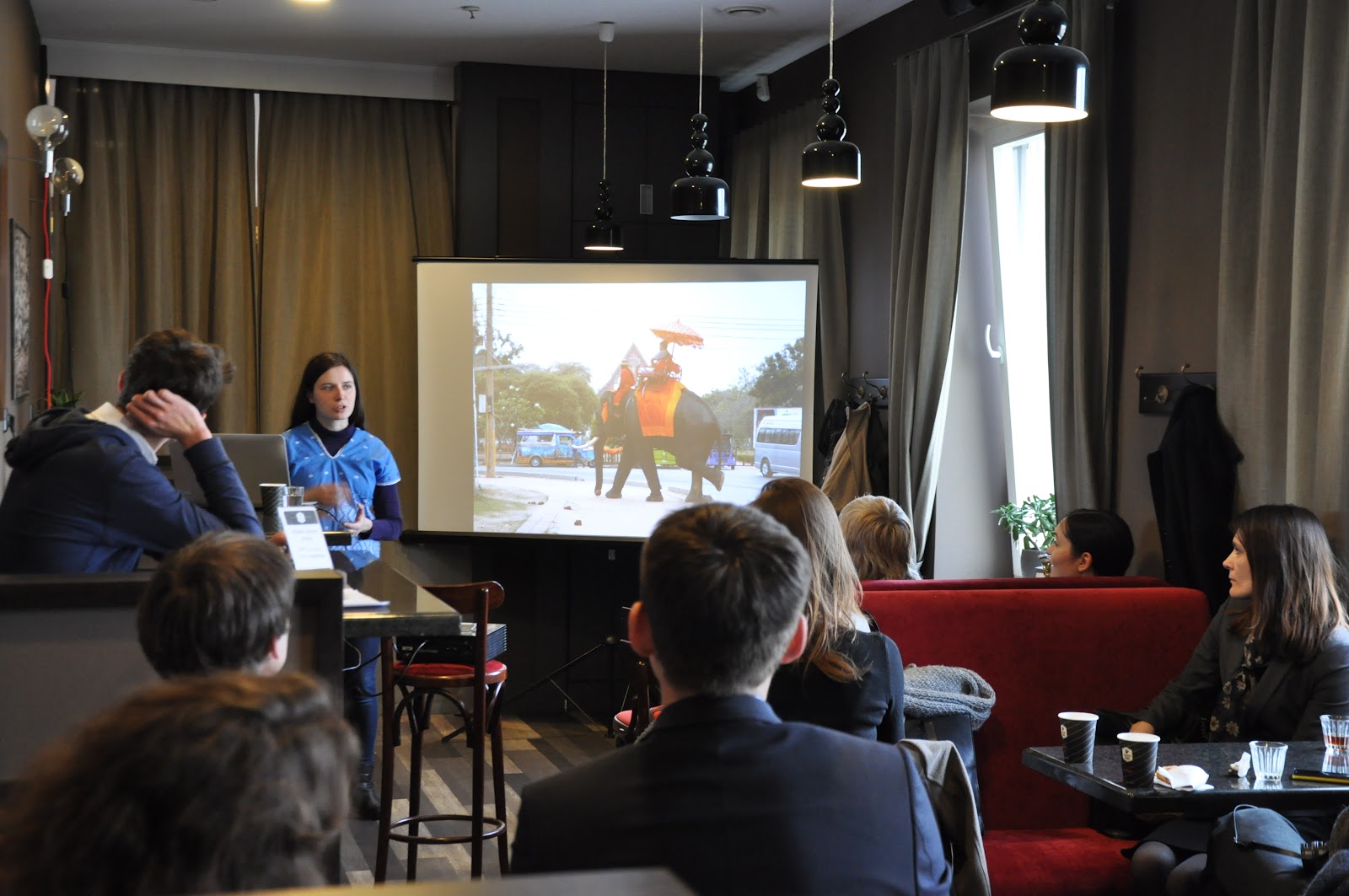
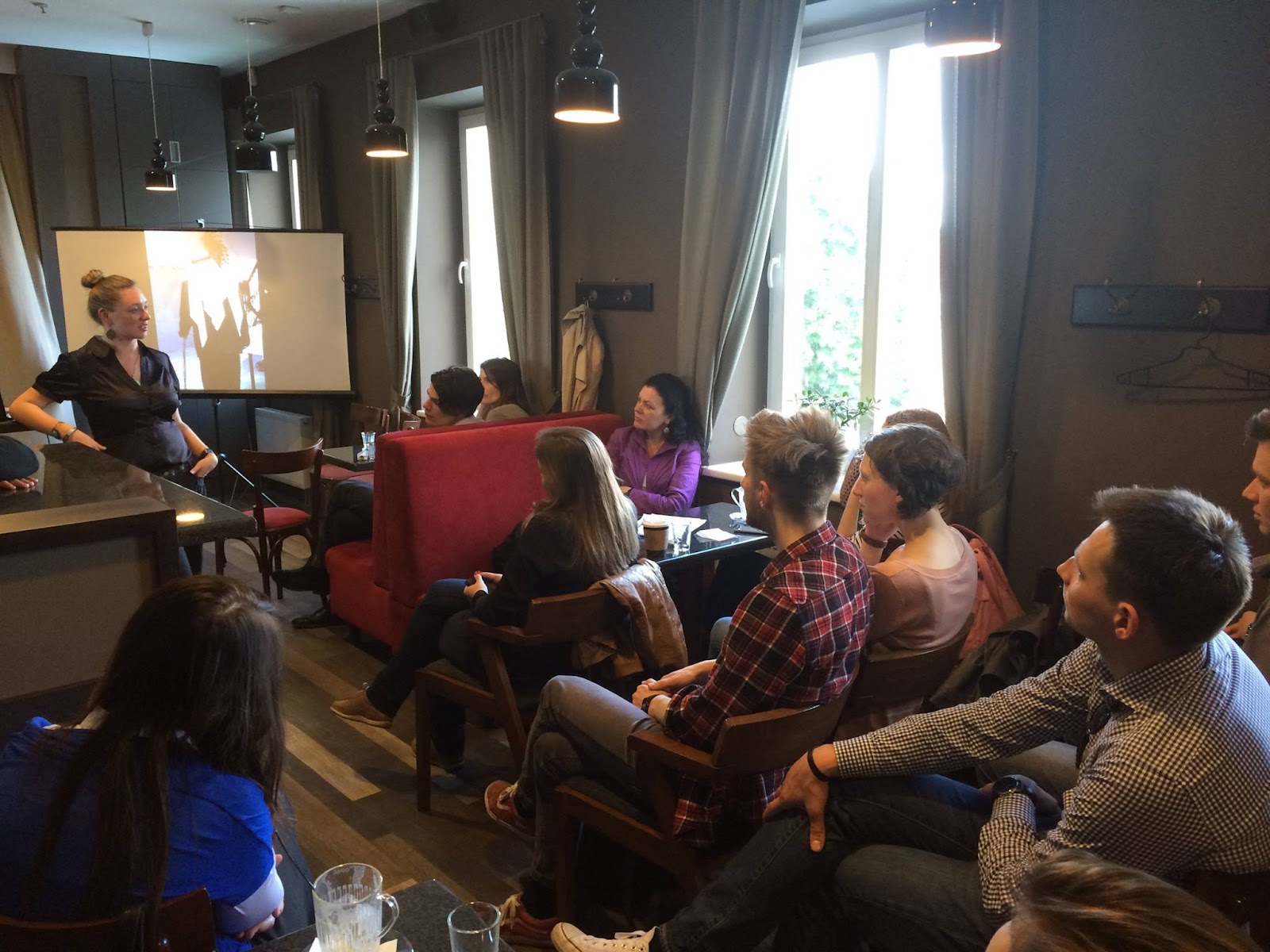
Informal discussions on different developing countries were relaunched and are planned to take place till  summer 2017. Some of them are planned with foreigners residing in Vilnius, who are portrayed in a series of photo stories “Mūsiškiai” (Ours) - project’s social media campaign. The first informal meeting was organized on 24th November on the development and current situation of Ukraine with native Ukrainian living in Lithuania Diane Garlytska and publicist and activist Jonas Ohman. The discussion attracted over 30 participants.
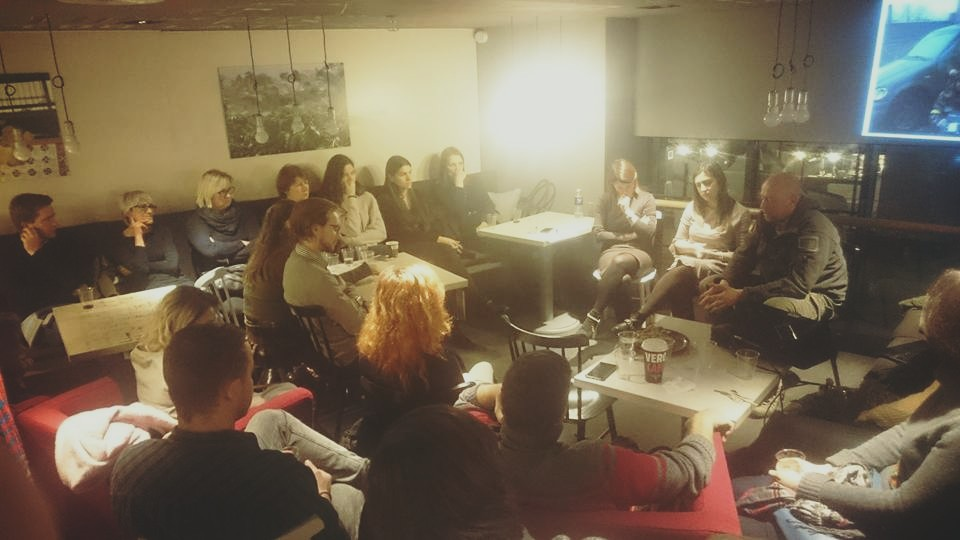

Another discussion was organised on 14 December with journalists Rosita Garskaite and Vaida Pilibaityte on Political situation and elections that took place few weeks ago were discussed. Special attention was paid to environmental issues and technologic waste dump in the capital Accra that harms not only people living and working in the dump but in the other areas of the city as well.  Local efforts to cope these problems through education and other initiatives were also discussed as well as significant role of religion and religious communities.

Social Media Campaign

Social media campaign “Mūsiškiai” (“Ours”) has been launched in October.both in Lithuanian and English. In a series of photo stories posted on Facebook (can be found by hashtag #Ours #Mūsiškiai) we share the insights of the people who came to live in Lithuania from all over the world. They tell about their life both here and there, beautiful and painful things they encounter in Europe, Lithuania, challenges they face and stereotypes they hear. Every Tuesday we post a short photo story which will help Lithuanian public understand better and make these people more welcome. It also boost the awareness on specific country, for example Iran. People respond with comments and discussions takes place, especially in Facebook group “Foreigners in Vilnius”, which has around 6000 followers - both local and not.

So far 8 posts were made with 4 different personalities - people from Iran, Egypt, Nigeria and Ukraine. It reached around 15 000 audience on NGDO Platform alone, but the final number would be double or triple counting its popularity on public “Foreigners in Vilnius” group plus other posting places. The campaign will continue until summer. It has also offline features: informal discussions with the “heroes” of the photo stories are organised in Vilnius cafes, where various issues related to developing countries are discussed. Some of the stories will be developed into the articles and published in daily Lietuvos zinios and human rights portal www.manoteises.lt
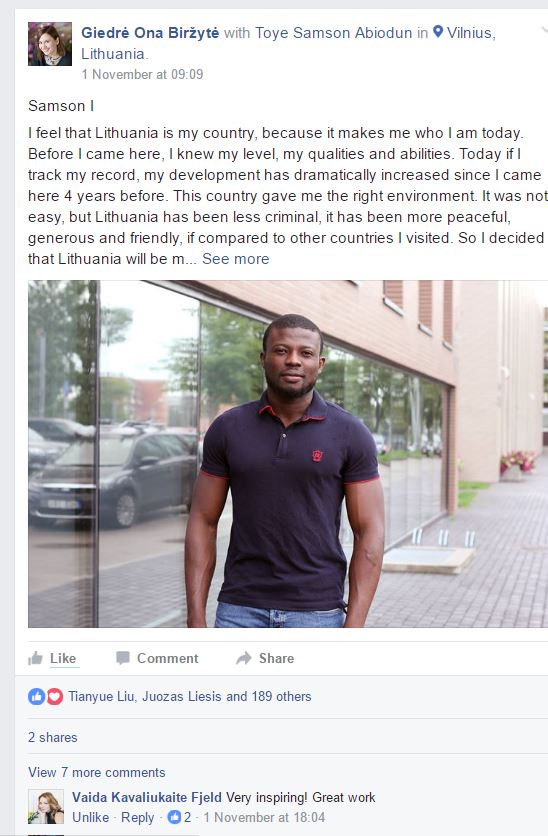
Samson 11.JPG


Media Research

The qualitative media research was conducted to investigate the appearance of development issues in Lithuanian media. A group discussion and individual interviews were held with eight biggest media houses that publish most information on development issues. Major findings are as follows: (1) editors of media houses can hardly identify clear Lithuanian DC vision and priorities themselves and would like to have a more consistent defining of the national policy, communicated by both NGDOs and state institutions, also they lack information on the assistance transparency and efficiency mechanisms; (2) the content of the news portals is more and more defined by the editors-on-duty, also articles of opinion formers are getting more popular and bigger reach-out, therefore more conditions should be provided for them to gain authentic experience and develop their relevant competences, including practical trainings (3) media houses are looking forward to closer cooperation with field experts and NGOs; (4) considering the high competition between local and development topics, the latter should be presented in innovative, catchy and related to local contexts forms, etc.

The survey results were introduced at the international discussion on contemporary challenges in nowadays media Media Buzz versus quality journalism held on 18 August in Vilnius. The major audience there were Lithuanian journalism students.
The publication of the research can be found here.


Bulletin
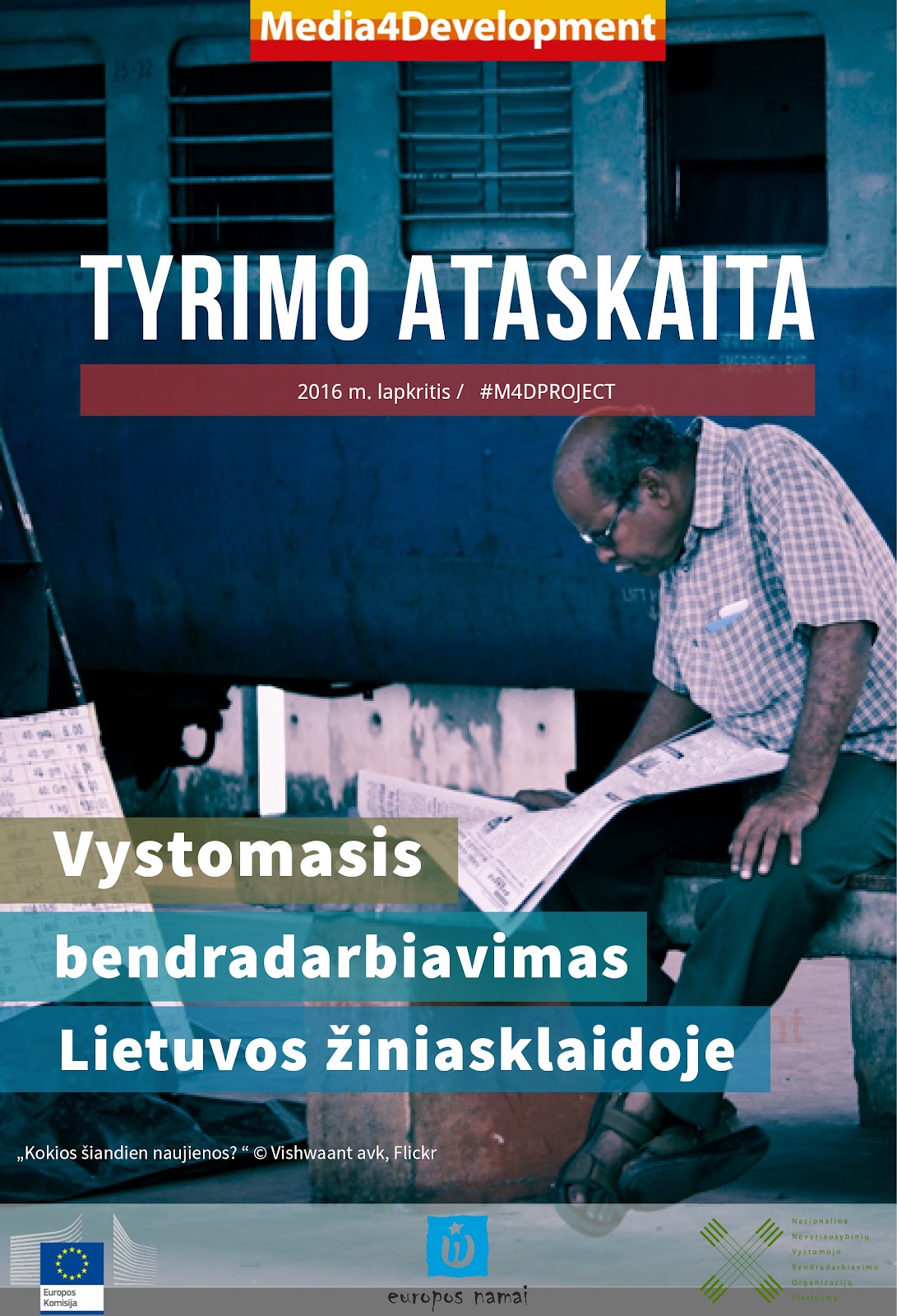
Vystomasis bendradrbiavimas Lietuvos ziniasklaidoje-Tyrimo ataskaita-EN.jpg
The fourth issue of the electronic bulletin addresses the topics of Sustainable Development Agenda and national implementation of Sustainable Development Goals. Based on the interviews made with officials (Ms Raimonda Murmokaite, Ambassador of the Republic of Lithuania to the United Nations, Ms Violeta Motulaite, director of the Development Cooperation Department of the Ministry of Foreign Affairs, Mr Kestutis Navickas, Minister of Environment), the articles cover the status quo in preparing to implement SDGs in Lithuania, the global concept of SDGs, the problems related to defining global indicators, best national practices in the preparation for SDG implementation, etc. The publication is sent out in mid-December 2016 to 551 subscribers (decision makers, media, NGO activists and other subscribers of the NGDO Platform  newsletter). It is also publisized on the internet sites of the House of Europe and NGDO Platform (pagalba.org). Later on, it is planned to publish individual articles in the media.
Miscellaneous

10 November project staff met with the representatives of the Africa Unit of the Ministry of Foreign Affairs to discuss cooperation possibilities in organising Africa Days events in 2017.

The bulletin and the project was introduced at the national development cooperation conference Sustainable Development Goals 2030: Lithuanian Contribution and Responsibility held on 6 December by the Ministry of Foreign Affairs.

Negotiations are underway with the Institute of Strategic Communications on the joint organisation of the journalists article/photo competition and the study trip of the winners to developing countries in 2017.

Tuesday, 7 June 2016

Spring mix of House of Europe Activities


Roundtables with journalists and activists

There were two roundtables organized with journalists and activists in the field of development cooperation in the following period.

First roundtable took place in April and targeted life in Thailand. Journalist as well as expert of Asia Daiva Repečkaitė shared her experiences from visiting Thailand and spoke about peoples’ daily life as well as ways to make a living there. The country is frequently called as “land of smiley faces” and the roundtable aimed to explore what is really behind these smiles.

DSC_0006.JPG
                                     A Roundtable with Journalists and Activists, 28 April 2016

Another roundtable was organized in May and challenged views about frozen Israeli-Palestinian conflict. An activist working in the field of development cooperation in Palestine Gabrielė Tervydytė shared her experience while making a short documentary in West Bank and presented Palestinian position on the the prolonged conflict. Participants actively discussed challenges and possibilities people face in this hostile context.

gabriele-susitikimo foto.jpg
                                      A Roundtable with Journalists and Activists, 19 May 2016

Film screenings

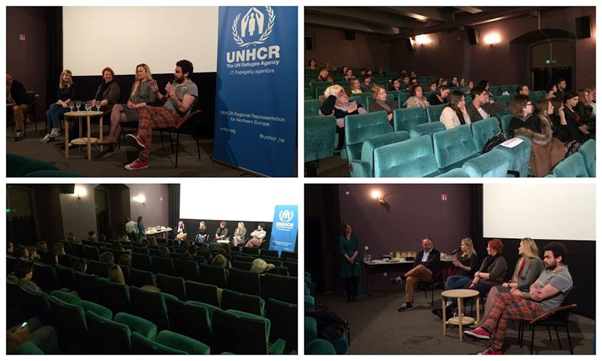
In the begining of May, in cooperation with the regional office of the United Nations Refugee Agency in Vilnius, a public screening of the  documentary “In an Alien Land” and a panel discussion in connection with the recent outbreak of the refugee crisis, reasons behind it and its outcomes was organised at the “Pasaka” cinema theatre in Vilnius.
Renata Kuleš (the head of United Nations Refugee Agency in Vilnius), Edvardas Špokas, Miglė Gaižiūtė, Eglė Marija Želvytė (LRT film crew) and a researcher of migration Karolis Žibas took part in the discussion moderated by a journalist Rosita Garškaitė.
The event was attended by more than 60 people. Audience took part in a lively debate with the film crew and experts and continued their exchange in an unofficial setting afterwards.


Open film screening at “Pasaka” cinema theatre, 
5 May 2016.


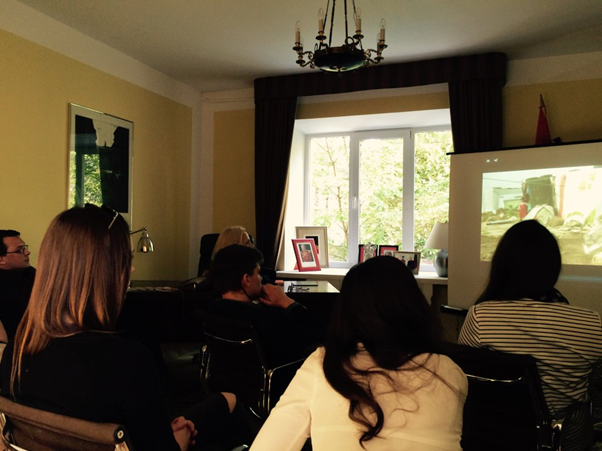
A second screening and a discussion about hope and despair people express while trapped in an “alien land” followed in the second part of May. “House of Europe” representatives introduced NGO community from Lithuanian Network of Anna Lindh Foundation with the film and its development process. Around 10 people attended the session.

 
Film screening at the meeting of Anna Lindh Foundation Lithuanian Network, 18 May 2016

African Days

In collaboration with Lithuanian Foreign Affairs ministry and several NGOs, International Day of Africa was celebrated in Vilnius and Kaunas on May 28. “House of Europe” took over a tradition of Subsacharan Africa cultural festival, formaly organized by other NGO, and prepared 4 day program. “African days” served as an umbrella for various events: African dance and drumming workshops, concert with the musicians from Africa,, meetings and discussions. Partners “Afri Ko” organized a discusion on Informational and communcational technologies and it’s influence on African development. The guest speakers from several African countries spoke in the panel. Event took place in Foreign Affairs Ministry. 

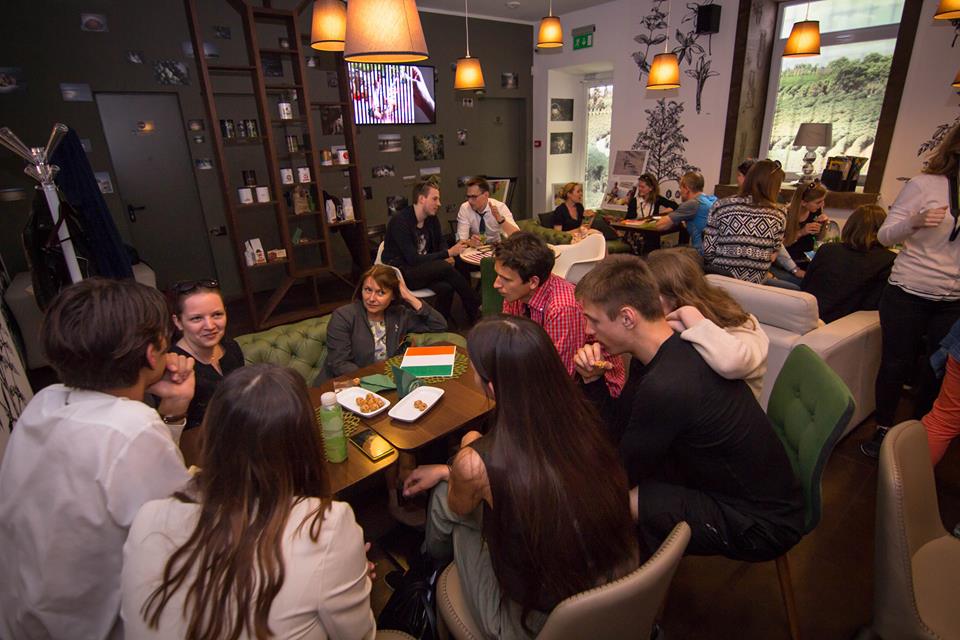
In Vilnius’ “Green Cafe” academics, journalists, volunteers presented their African experiences and specific topics in the world cafe principal. Around 35 people participated in the event. Giedrė Birzyte, a member of the project, presented her Kenyan trip. She also did the presentation in Kaunas Cultural Center of Various Nations. Approximately, audience was around 45 people.

Afrikos dienos.jpg
World cafe discussions, African days in Vilnius, May 26, 2016

Photo exhibition

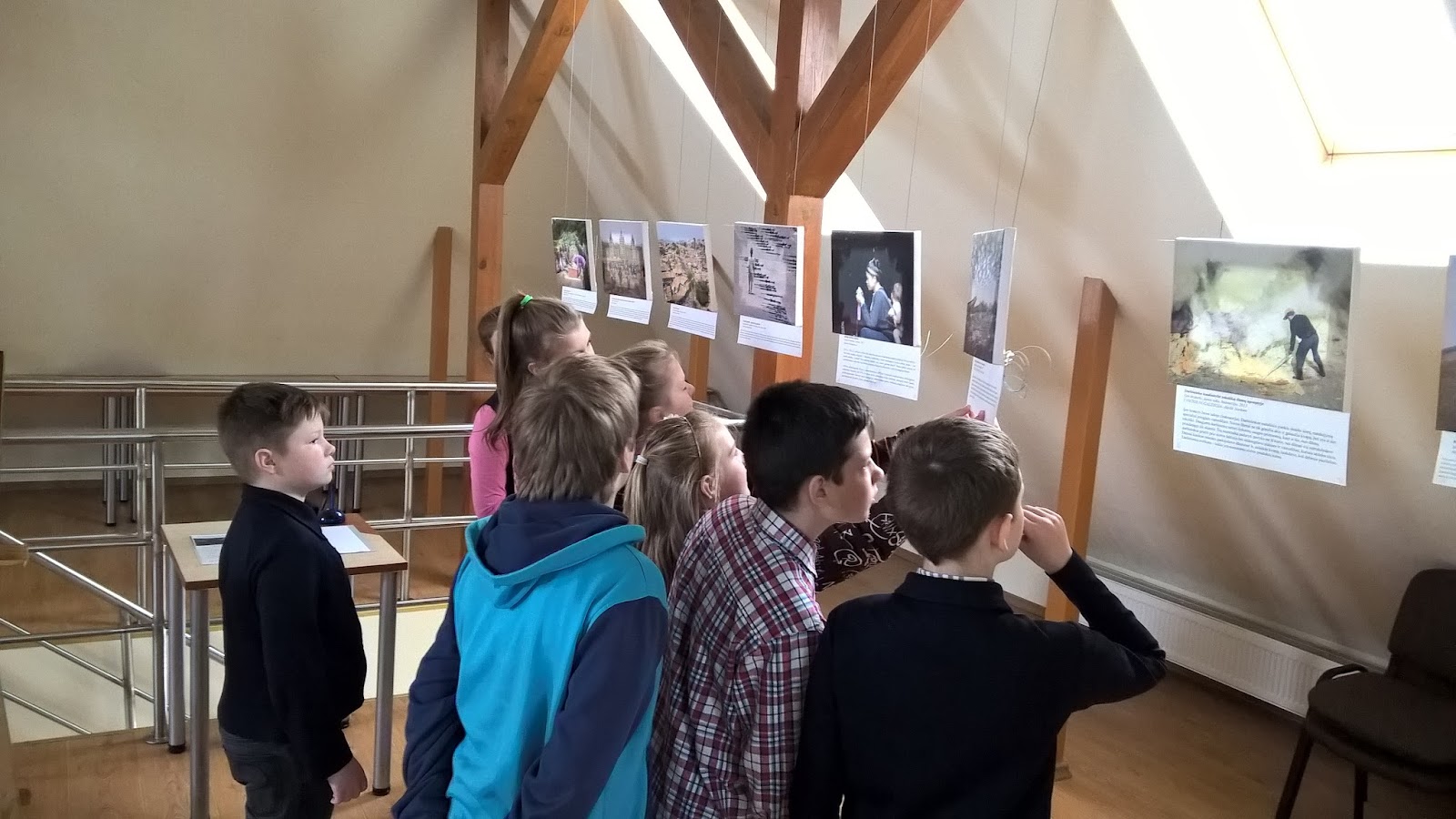
The photo exhibition “The World As You See It” continues to be displayed in different venues and invites local communities to take a deeper look into life of developing countries. In April, exhibition was displayed in Education Development Centre and Proffesional training centre of Žirmūnai. In May, it stayed in the public library of Šilutė. Further, the exhibition will be displayed in the Parliament as well as Government’s facilities and will visit smaller towns around Lithuania.
WP_20160518_11_42_19_Pro.jpg
Photo exhibition “The World as You See it” displayed in Šilutė.

Bulletin on Humanitarian Aid

At the end of May, an electronic bulletin on humanitarian aid was issued and sent out to policy makers and opinion leaders, in particular, members of the Parliament, public officials, politicians, journalists, representatives of NGO sector and national academia. While featuring articles of mainly local authors, this issue aims to present in-depth analysis of the latest tendencies and chronic challenges in the humanitarian aid sector:
  • Humanitarian aid given by Lithuanian citizens: main trends, directions, institutional challenges and future opportunities (prepared by Lithuanian journalist Jūratė Važgauskaitė).
  • Expert opinion about macro-level factors for the effectiveness of humanitarian aid and the need for structural reforms (prepared by Žilvinas Švedkauskas, NGO“House of Europe”).
  • World Humanitarian Summit and Lithuania’s part in it (prepared by Lithuanian journalist Rosita Garškaitė).
  • The prospects of cash transfers in humanitarian aid (a translation of a text by Paul Harvey, an expert at Overseas development institute).
  • Importance of humanitarian communication.
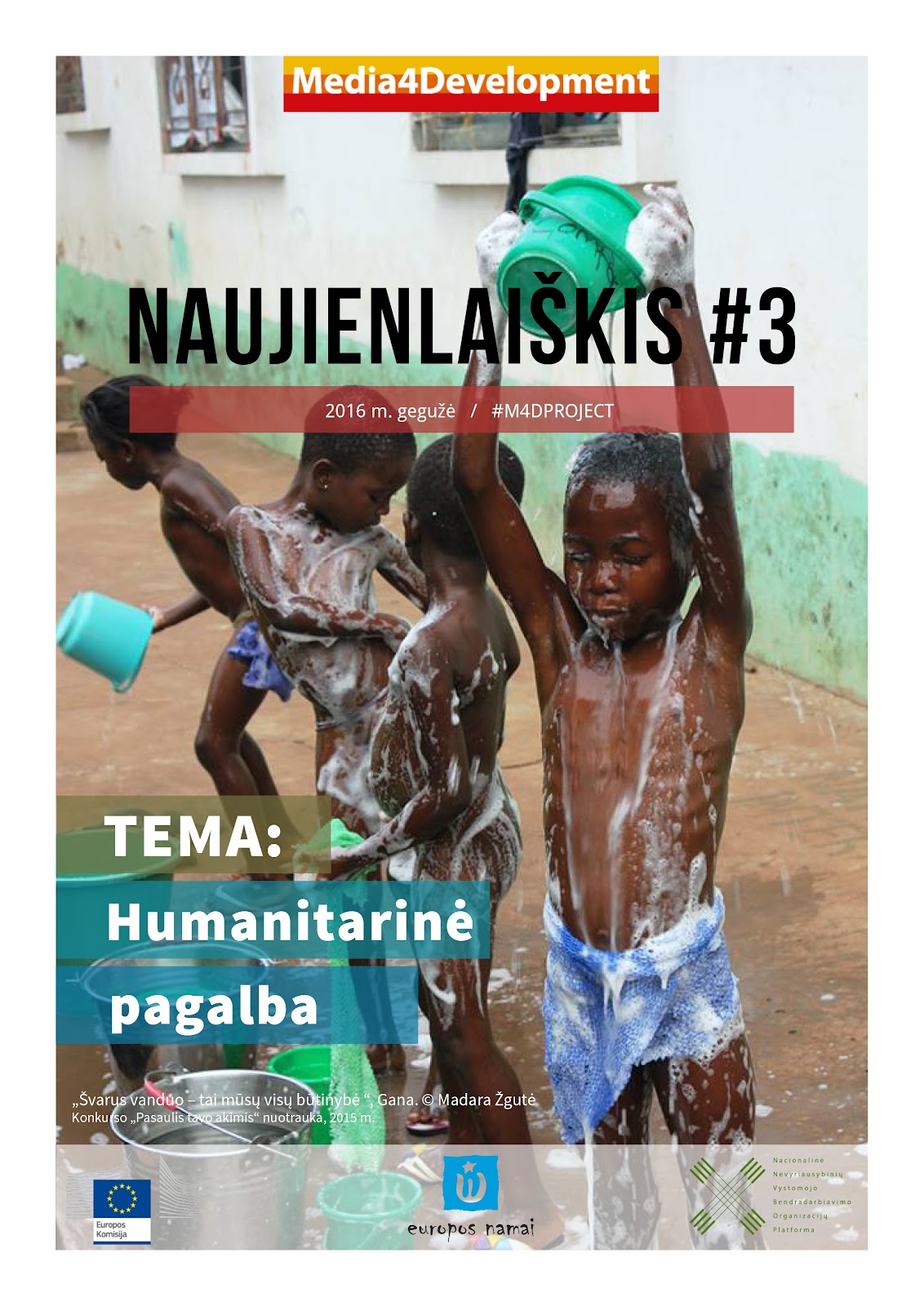
Naujienlaiskis3-paveikslelis.jpg
Cover of the Bulletin no 3.
Media appearances

On the 25th of May, “Media4Development” project was mentioned when African days idea and the program was announced on the National Broadcaster’s morning show “Labas rytas”. Project’s communication officer shortly introduced viewers to journalists’ trip to Kenya and invited to attend the meetings in Vilnius and Kaunas.

Article Section

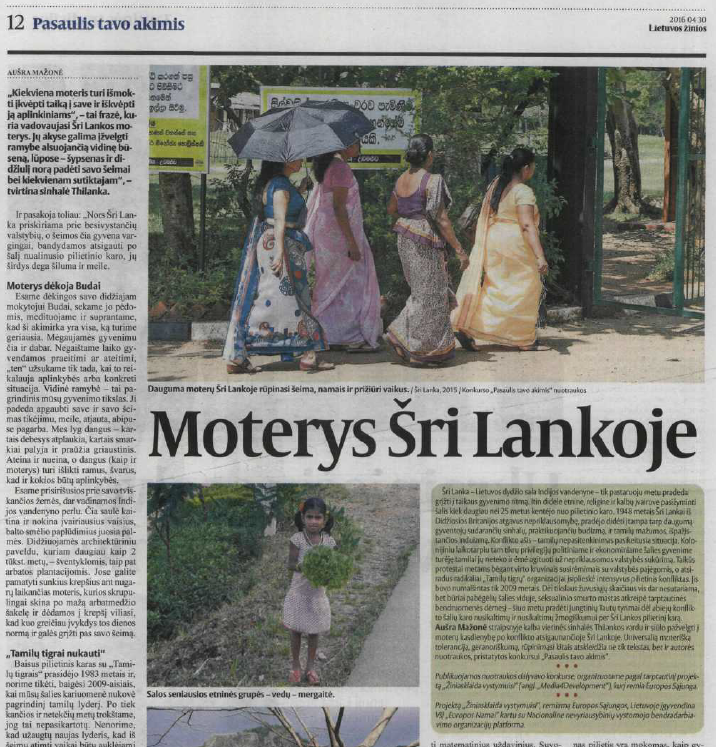
In April - May, a section in the national daily Lietuvos žinios (introduced in order to reach a wider public and familiarize it with current development issues) was further complemented by 7 different articles of various Lithuanian journalists. Traditional bee-keeping and eco-challenges for Lake Victoria in Kenya were presented by Berta Tilmantaitė, whereas Vaida Blažytė covered a conflict between man and nature in country’s nature conservancies. Besides special insights to Kenya, articles about World Humanitarian Summit, women rights in Sri Lanka and women entrepreneurs in Thailand, paradoxes of humanitarian aid in Ukraine were published. Each article is accompanied by an introduction into a certain relevant aspect of development cooperation.

 Aušra Mažonė. Women of Sri Lanka. 30 April, 2016.

Wednesday, 20 April 2016

Study trip to Kenya, authentic stories in the (social) media, roundtables and travelling exhibition


Study trip to Kenya
By the end of January winners of photo and article competitions in Lithuania - Akvilė Norkute and Vaida Blažytė - as well as journalist Lauryna Vireliūnaitė and project’s media specialist Giedrė Biržytė went on a study trip to Kenya. The aim of the trip was to collect authentic, first-hand stories of local Kenyan communities. Thus, the programme of the trip included a number of visits to distant villages and slums of the capital city Nairobi, meetings with Kenyan NGOs and local people. The delegation visited Ol Pejeta nature reserve, Huruma slum, met women of Samburu tribe, members of self-help groups in Nairobi.

Stories collected throughout the study trip are being publicized in the national media and presented in public discussions.

moterys.jpg
A meeting with Samburu Women, January 2016

Roundtables with journalists
Three roundtable discussions were organised to foster more in-depth discussions by journalists visiting developing countries with the public.

By the end of January a roundtable on albino situation in Tanzania was held. Vaida Blažytė, the winner of the article competition, shared her insights about the social marginalisation of the local albino community in East Africa and presented her experience while shooting a documentary on the topic. Issues of prejudice and health care were highlighted. Possibilities for Lithuanians to contribute while overcoming these difficulties were addressed as well.
Vaida.jpg
A Roundtable with Journalists, 21 January 2016.

At the end of February the second roundtable took place where participants of the aforementioned  study trip to Kenya presented their experiences there.  The audience was introduced to the socio-political situation of the country as well as stories about HIV-support community and self-help initiatives in Nairobi slums.

DSCN0294.JPG
A Roundtable with Journalists, 26 February 2016.

In March, the third roundtable was held where Lithuanian journalists and lecturer at Vilnius University Džina Donauskaitė and radio journalist Živilė Kropaitė shared their stories from their recent trip to Nepal organised by the Minority Rights Group. The journalists covered not only the diverse ethnic constitution of the country’s population, but also discussed the reasons behind the ineffectiveness of humanitarian aid provided by the international community after the earthquakes that hit Nepal in 2015.
DSC_5328copy.jpg
A Roundtable with Journalists, 23 March 2016.
Additionally, in February another roundtable was organized in order to bring together participants  (professionals and amateurs) of photo and article competitions on development organized in 2015. Prospects for future cooperation and developmental journalism in general as well as the code of conduct for development journalism were discussed there.

Photo exhibition
The photo exhibition The World As You See It continues to be displayed in different venues: Šiauliai Stasio Šalkauskio gymnasium, Institute of International Relations and Political Science at Vilnius University as well as in Education Development Centre. The exhibition will further be displayed in the Lithuanian Parliament and it will travel around the country reaching inhabitants of smaller Lithuanian towns.
Paroda-VUTSPMI.jpg
Photo Exhibition at the Institute of International Relations and Political Science, Vilnius, March 2016.

Article section
In January a new section was introduced in the national daily Lietuvos žinios in order to reach a wider public and familiarize it with current development issues. Every Saturday the stories of Lithuanian journalists that visited developing countries as well as selected articles from the article competition organised in Lithuania last year are published there. Each article is accompanied by an introduction into a certain aspect of development cooperation disclosed in the publication. 12 articles have been published so far, including those selected by project partners.   
20160214_143304.jpg
“People of the Ocean” by Berta Tilmantaitė in “Lietuvos Žinios”, February 2016.

Appearances on TV

On the National TV morning programme “Labas rytas, Lietuva” project writer Vaida Blažytė and media specialist Giedre Birzyte appeared respectively on 19 January and 21 March with stories from the Kenya trip.

Social media
Facebook continues to be a priority channel social media communication. The trips and round tables with journalist provide attractive content and the audience steadily increases.  Since March boosting of the stories published in the media enabled to reach wider audience from approx. 4000 to 16 000 users. For example:
Samburu - Vaida.png
Example of Facebook post boost

Currently, the Facebook account has almost 2000 followers. Since January 46 posts with hashtag #M4Dproject appeared on the site.

Since January Twitter was also used as a social media communication channel. The profile has already reached 49 followers and 20 tweets using hashtag #M4Dproject were posted. Twitter is not very popular in Lithuania, however, it is on the rise, especially among policy makers, experts and opinion leaders. So it is these particular groups that are targeted through this channel.

Social media campaign targeting the most common development myths is underway. It will be conducted with the help of videos of a well-known Lithuanian stand-up comedian and special photo series.


Thursday, 7 January 2016

House of Europe: ending the year with a premier of a documentary


Production of the documentary In an Alien Land

Lithuanian National Television (LRT) film crew went on a field trip to Lebanon in November 2015 to prepare a documentary about the life of Syrian refugees in Lebanon revealing legal and social challenges they face, everyday realities, as well as their personal values and future hopes. In December 2015 - January 2016, the documentary In an Alien Land (Svetimoje žemėje) was twice broadcast on LRT attracting the attention of more than 283 300 viewers.
maxresdefault.jpg
A TV Advertisement for the documentary, December 2015.

Bulletin on Migration 

In December electronic bulletin on migration was issued and sent out  to policy makers and opinion leaders, in particular, members of the Parliament, public officials, politicians, journalists, representatives of NGO sector and national academia.

The bulletin aimed to address migration crisis and its impact on global development. The issue featured the following topics:
  • Migration from Lithuania in the 19th century and the potential of Lithuanian immigration policies after recent amendments (prepared by Lithuanian journalist and migration expert Gintarė Gedrimaitė);
  • The importance and lack of enduring immigration strategies in Lithuania (prepared by Reseacher at CEPS (Centre for European Policy Studies) Lina Vosyliūtė).
  • The tendencies of migration in the Mediterranean analysed (excerpts from International Organization for Migration and the Knoll blog).
  • Refugee stories (based on information collected from the Red Cross in Lithuania, „The New York Times“, „Desperate Reasons for a Desperate Journey“ and Human Rights Watch).

Naujienlaiskis-TITULINIS.jpg
Cover of the Bulletin no 2.
Roundtables with journalists
In December 2015, two roundtable discussions with journalists were organised. The events were open to the public and encouraged an exchange of views between business, media and NGO representatives.

At the first roundtable development and environmental challenges in Nigeria as well as migration and refugee issues in Lebanon were discussed. Journalist Rosita Garškaitė who visited Nigeria shared her insights and presented the current situation in Niger delta after recent oil spillovers. TV Journalist Edvardas Špokas described the TV crew experiences in Syrian refugee camps in Lebanon  and the idea behind the forthcoming documentary In an Alien Land (Svetimoje žemėje).

Susitikimas su Rosita.jpg
A Roundtable with Journalists, 3 December 2015.

The second roundtable was addressed the issue of traditional crafts in Kenya. Nanook.lt contributors Berta Tilmantaitė and Karolis Pilypas Liutkevičius who went to Kenya to prepare photo stories and a short documentary about everyday life of local tribes presented their fieldwork experience. A number of questions were raised throughout the discussion concerning the possible role of the global North in fighting the extinction of traditional crafts in developing countries. The similarities between traditional Lithuanian and Kenyan crafts were also discussed there.

Berta-photo.jpg
A Roundtable with Journalists, 17 December 2015.

Photo exhibition

The photo exhibition The World as You See It is further displayed in different locations. In December 2015, it was on display at the “Swedbank” headquarters in Vilnius. At the end of the year, during the closing national events of the European Year for Development it was exhibited at the Ministry of Foreign Affairs.

SWEDBANKE.jpg
Exhibition The World as You See i” at the Lobby of Swedbank, December 2015.